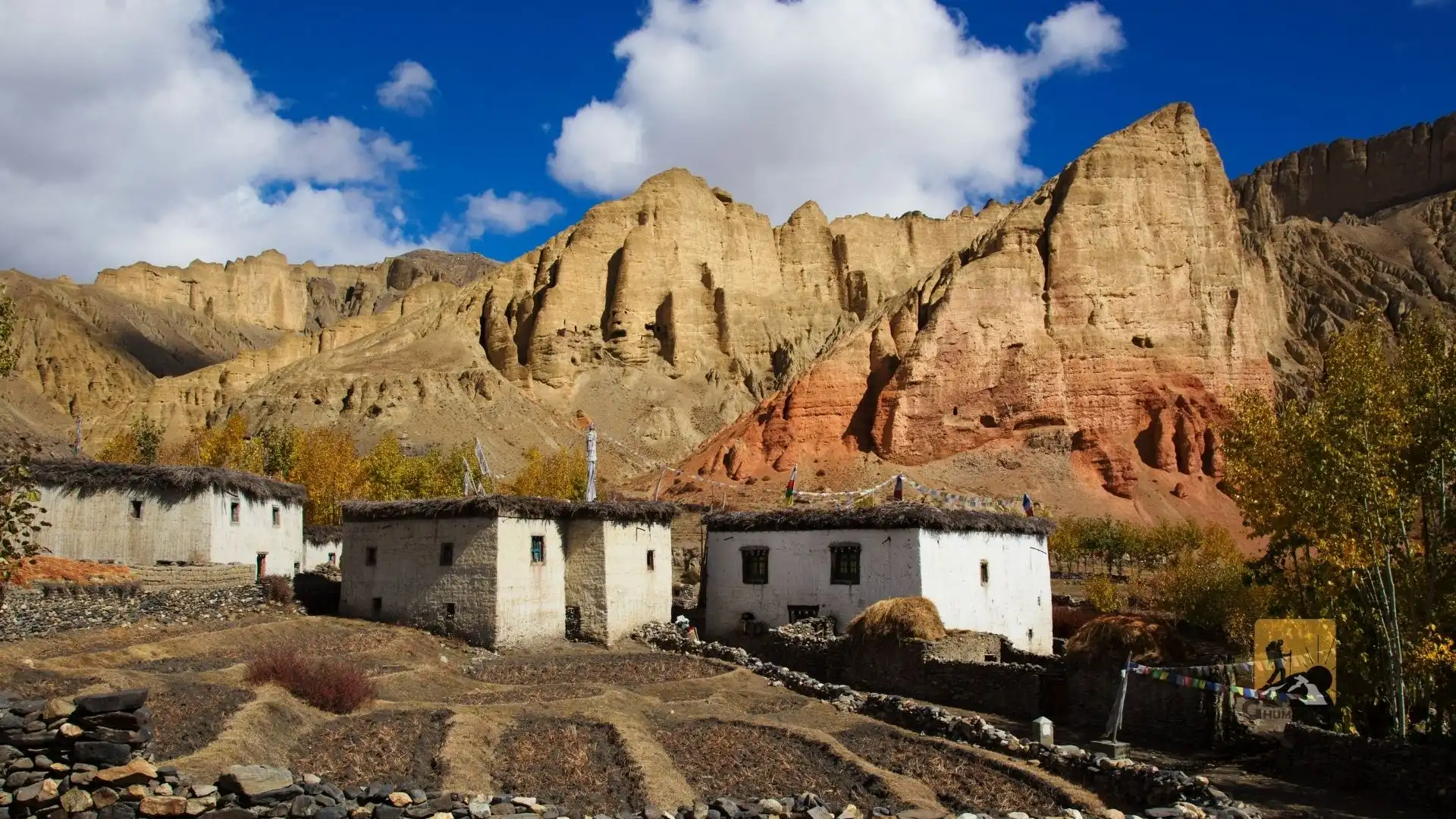
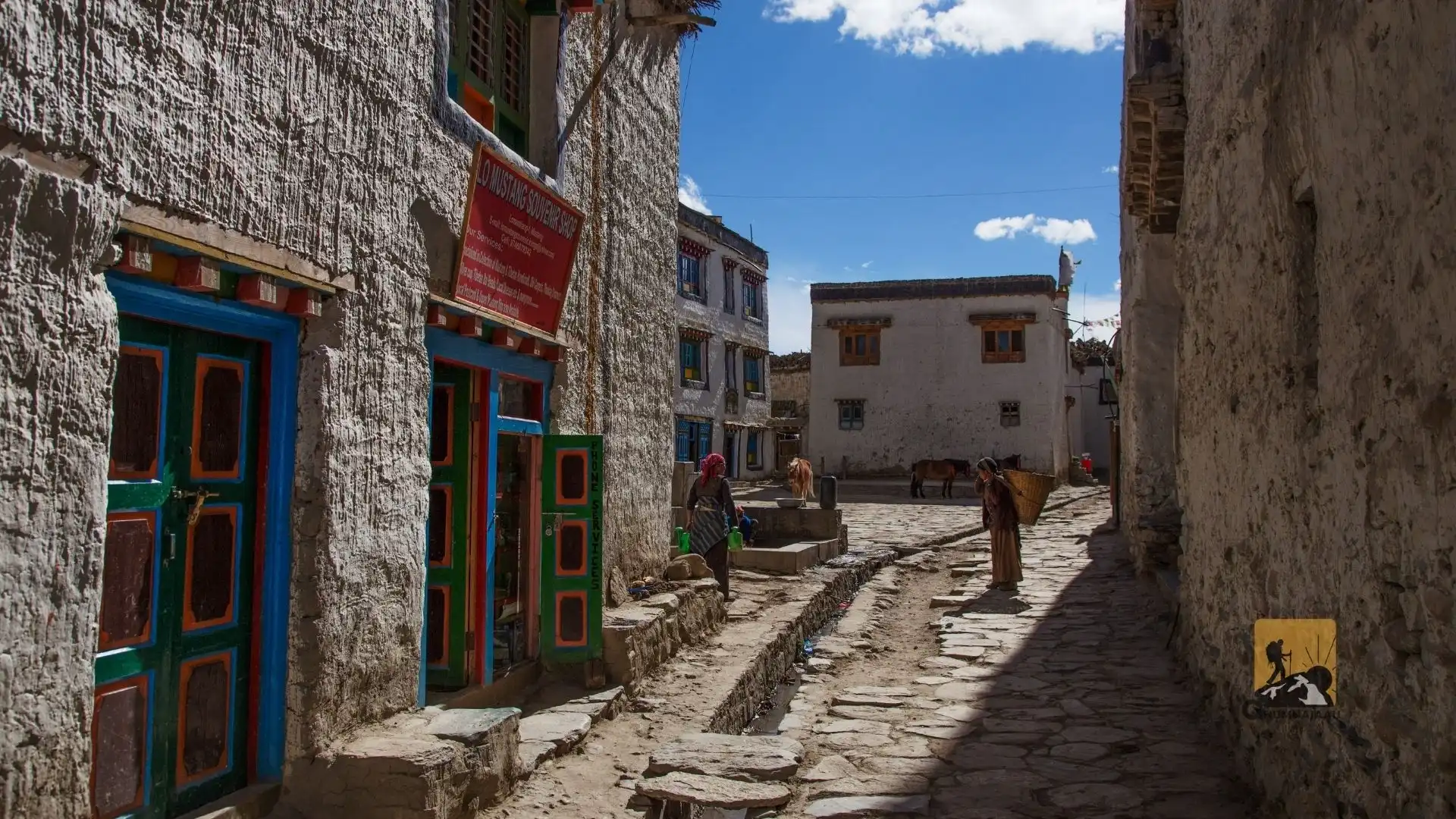
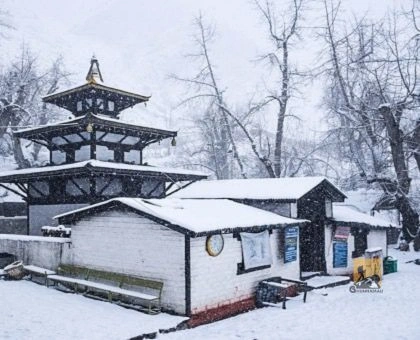
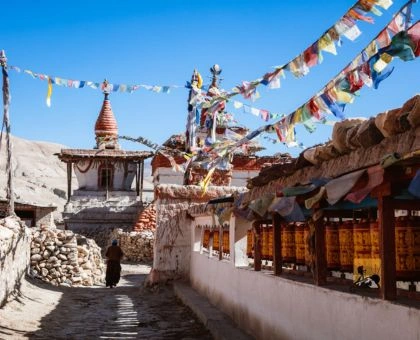
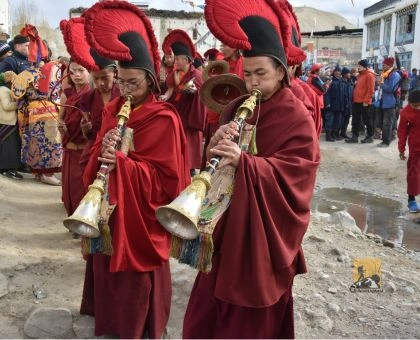
Step into the hidden Himalayan kingdom of Upper Mustang, where ancient Tibetan culture, dramatic desert canyons, sacred cave monasteries, and timeless villages create one of Nepal’s most extraordinary trekking adventures. The Upper Mustang Trek via Luri Gompa takes you deep into the legendary Forbidden Kingdom of Lo, crossing high mountain passes, exploring centuries-old monasteries, and discovering the mystical Luri Cave Monastery carved into towering cliffs. From the walled city of Lo Manthang to the remote valleys of Yara and Tange, this journey offers a rare blend of spiritual discovery, cultural immersion, and breathtaking Himalayan scenery.
The Upper Mustang Trek via Luri Gompa is a remarkable Himalayan journey into Nepal’s hidden trans-Himalayan region bordering Tibet. Once restricted to outsiders, Upper Mustang still preserves its ancient Tibetan Buddhist culture, medieval villages, and spiritual traditions untouched by modern development.
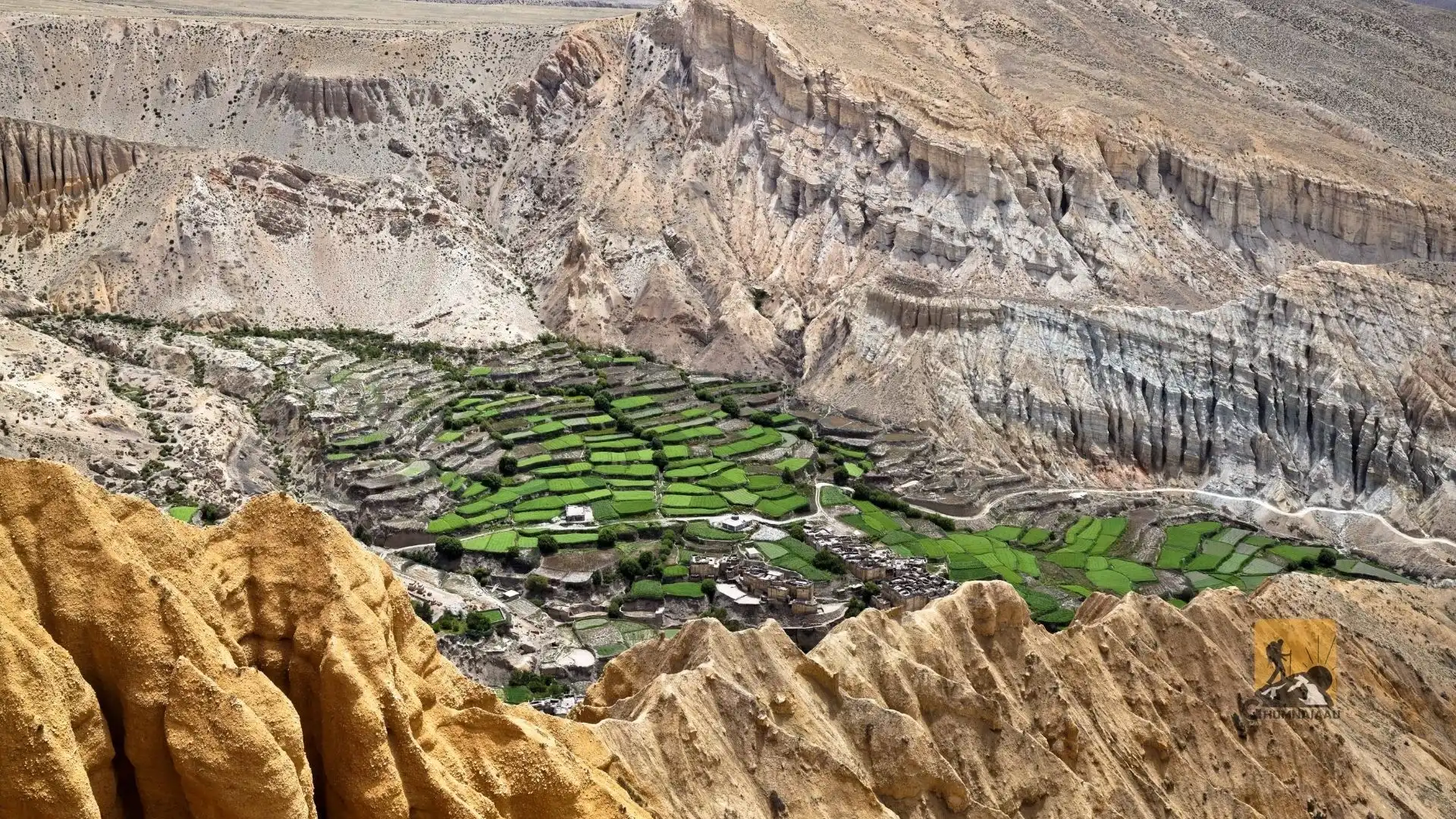
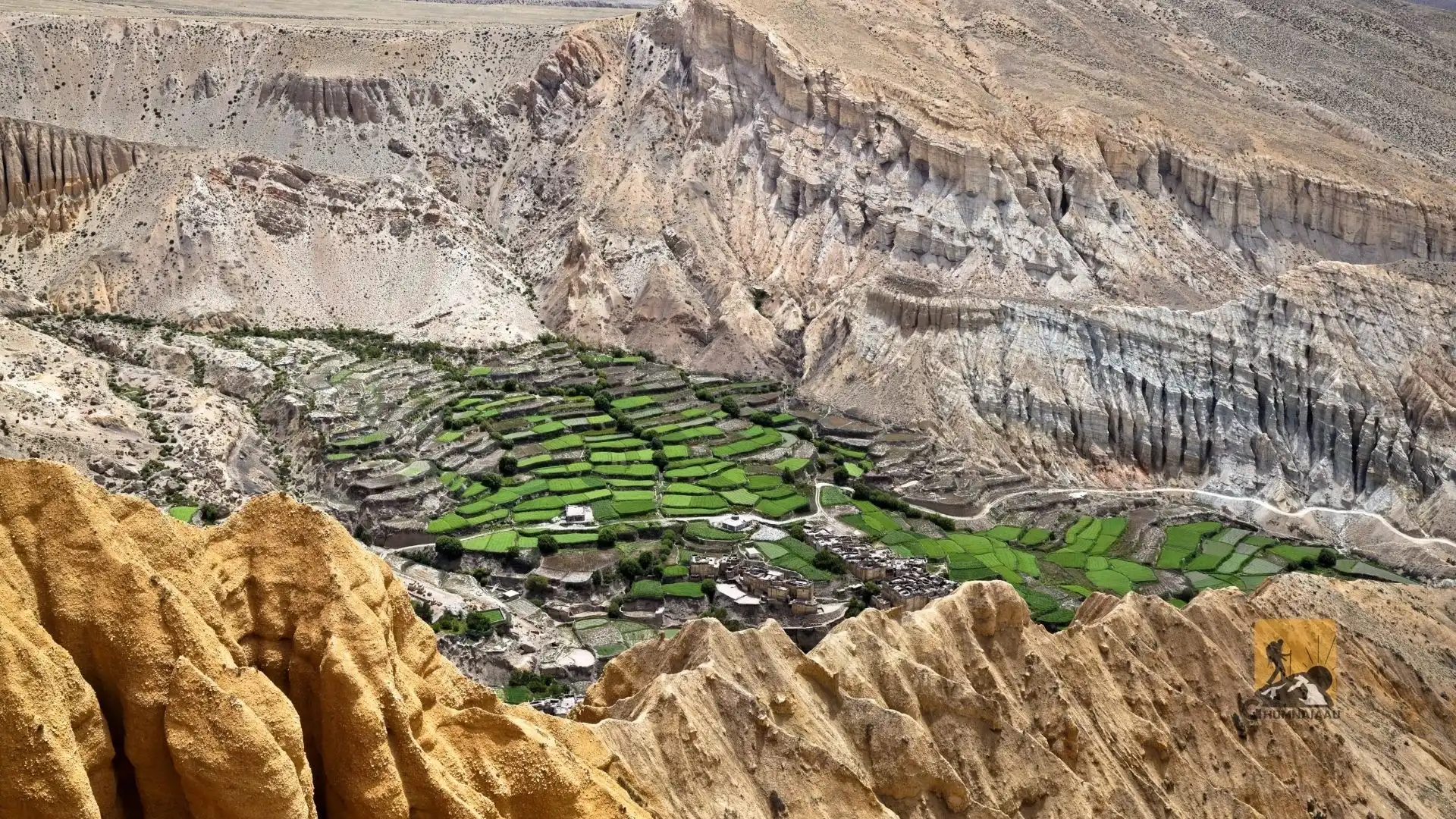
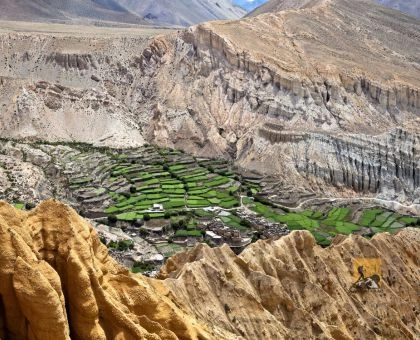
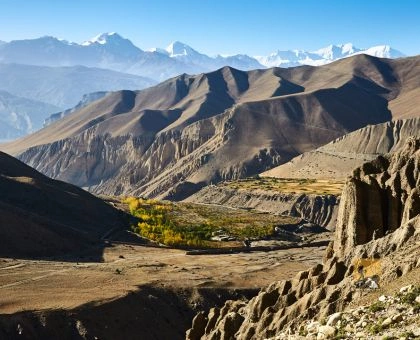
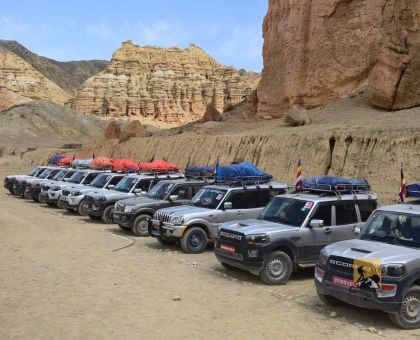
The adventure begins with a scenic drive from Kathmandu to Pokhara, followed by a spectacular mountain flight to Jomsom. From here, the trail follows the Kali Gandaki Valley through Kagbeni, the traditional gateway to Upper Mustang. As you ascend higher into the rain-shadow region of the Himalayas, the lush green hills gradually transform into dramatic desert landscapes filled with wind-eroded cliffs, deep gorges, and colorful rock formations. Along the route, trekkers pass ancient villages such as Chele, Syanbochen, Ghaymi, and Charang, where whitewashed houses, prayer flags, monasteries, and Tibetan traditions dominate daily life. One of the major highlights is Lo Manthang, the legendary walled capital of Mustang, famous for its royal palace, ancient monasteries, and unique Himalayan culture.
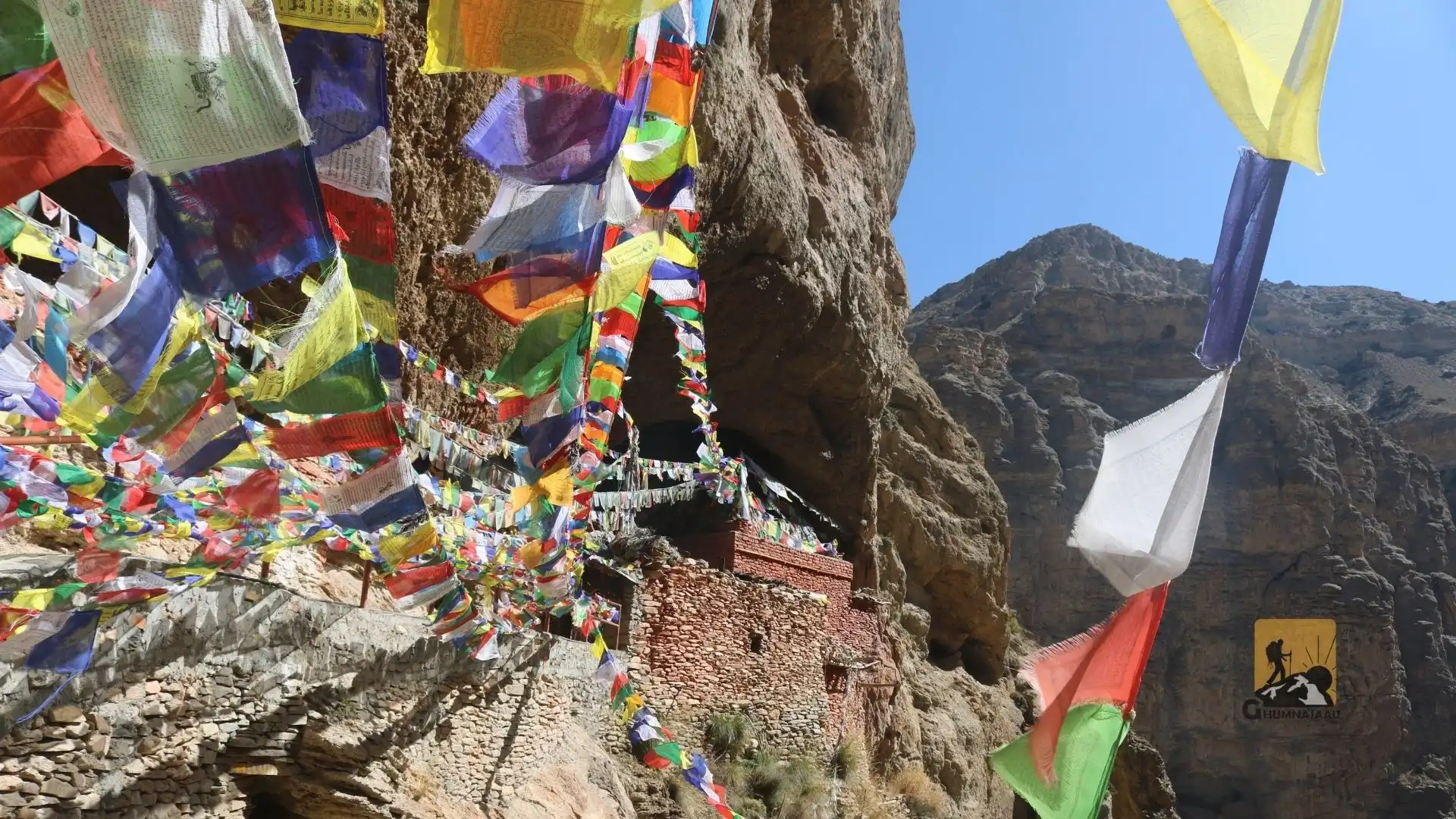
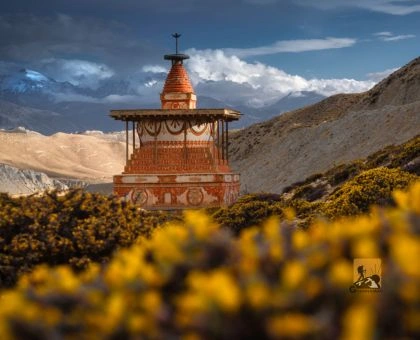
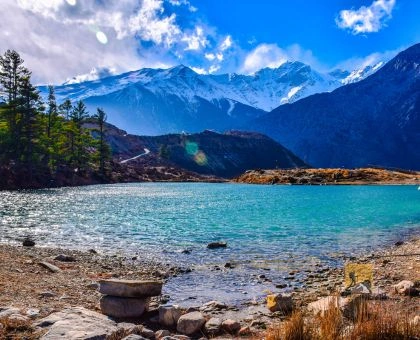
Beyond Lo Manthang, the trek becomes even more adventurous as you head toward the remote villages of Yara and Tange. The sacred Luri Gompa, hidden inside a cliff cave, offers one of the most spiritual and fascinating experiences in the region. Its centuries-old Buddhist murals, ancient chortens, and mystical cave setting make it one of Mustang’s most treasured hidden gems. Throughout the journey, trekkers enjoy breathtaking views of Dhaulagiri, Annapurna, Nilgiri, Tilicho Peak, and other Himalayan giants while experiencing the unique biodiversity and untouched beauty of Nepal’s high-altitude desert region.
The Upper Mustang Trek via Luri Gompa is unlike any other trek in Nepal because it combines remote wilderness, Tibetan Buddhist heritage, ancient cave exploration, and off-the-beaten-path adventure in one unforgettable journey.
Unlike the crowded Everest or Annapurna routes, Upper Mustang offers peaceful trails, authentic local culture, and dramatic desert scenery similar to the Tibetan Plateau. The addition of the remote Luri Gompa route makes this trek even more unique, taking travelers into hidden valleys rarely visited by tourists.
This trek is perfect for travelers seeking:
|
Day |
Route |
Elevation |
Duration |
|
Day 01 |
Arrival in Kathmandu |
1,350m / 4,429ft |
Arrival |
|
Day 02 |
Trek preparation & Kathmandu sightseeing |
1,350m / 4,429ft |
Half day |
|
Day 03 |
Drive Kathmandu to Pokhara |
950m / 3,116ft |
6–7 hrs |
|
Day 04 |
Fly to Jomsom & trek to Kagbeni |
2,897m / 9,504ft |
3–4 hrs |
|
Day 05 |
Trek Kagbeni to Chele |
3,050m / 10,006ft |
5–6 hrs |
|
Day 06 |
Trek Chele to Syanbochen |
3,475m / 11,401ft |
6–7 hrs |
|
Day 07 |
Trek Syanbochen to Ghaymi |
3,850m / 12,631ft |
5–6 hrs |
|
Day 08 |
Trek Ghaymi to Charang |
3,506m / 11,503ft |
4–5 hrs |
|
Day 09 |
Trek Charang to Lo Manthang via Ghar Gompa |
3,810m / 12,500ft |
7–8 hrs |
|
Day 10 |
Explore Lo Manthang |
3,810m / 12,500ft |
Full day |
|
Day 11 |
Explore Chhoser Cave & village |
3,900m / 12,795ft |
Full day |
|
Day 12 |
Trek Lo Manthang to Yara |
3,900m / 12,795ft |
6–7 hrs |
|
Day 13 |
Hike to Luri Gompa |
4,005m / 13,140ft |
4–5 hrs |
|
Day 14 |
Trek Yara to Tange |
3,370m / 11,056ft |
6–7 hrs |
|
Day 15 |
Trek Tange to Tetang/Chhusang |
3,022m / 9,915ft |
8–9 hrs |
|
Day 16 |
Trek Chhusang to Jomsom |
2,710m / 8,891ft |
6–7 hrs |
|
Day 17 |
Fly Jomsom to Pokhara |
950m / 3,116ft |
25 mins |
|
Day 18 |
Return to Kathmandu |
1,350m / 4,429ft |
6–7 hrs |
|
Day 19 |
Final departure |
— |
Departure |
Spring (March to May)
Spring is one of the best seasons for the Upper Mustang Trek. The weather remains stable with clear mountain views, comfortable temperatures, and colorful landscapes. Days are pleasant for trekking while nights remain cool.
Summer/Monsoon (June to August)
Upper Mustang lies in the rain-shadow area of the Himalayas, making it one of Nepal’s best monsoon trekking destinations. While other trekking regions receive heavy rainfall, Mustang stays relatively dry with excellent trekking conditions.
Autumn (September to November)
Autumn offers crystal-clear skies, stable weather, and spectacular mountain visibility. This is the most popular trekking season due to ideal temperatures and dry trails.
Winter (December to February)
Winter brings cold temperatures and occasional snowfall at higher elevations. Trekking is still possible, but harsh weather can make some sections challenging.
The Upper Mustang Trek via Luri Gompa is considered a moderate to strenuous trekking adventure. Trekkers should have good physical fitness and the ability to walk 5–8 hours daily across rough mountain terrain.
The trail includes:
Previous trekking experience is helpful but not mandatory. Proper acclimatization, hydration, and a steady pace help reduce altitude-related risks.
Accommodation during the trek is mainly in traditional teahouses and local lodges. Rooms are generally twin-sharing with basic but comfortable facilities.
Meals Available
Facilities
The hospitality of local Mustang communities adds warmth and authenticity to the trekking experience.
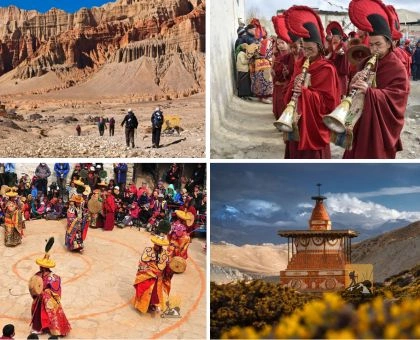
Upper Mustang is deeply influenced by Tibetan Buddhism and ancient Himalayan traditions. The region is home to the Loba people, whose language, clothing, architecture, and customs closely resemble Tibetan culture.
Trekkers can experience:
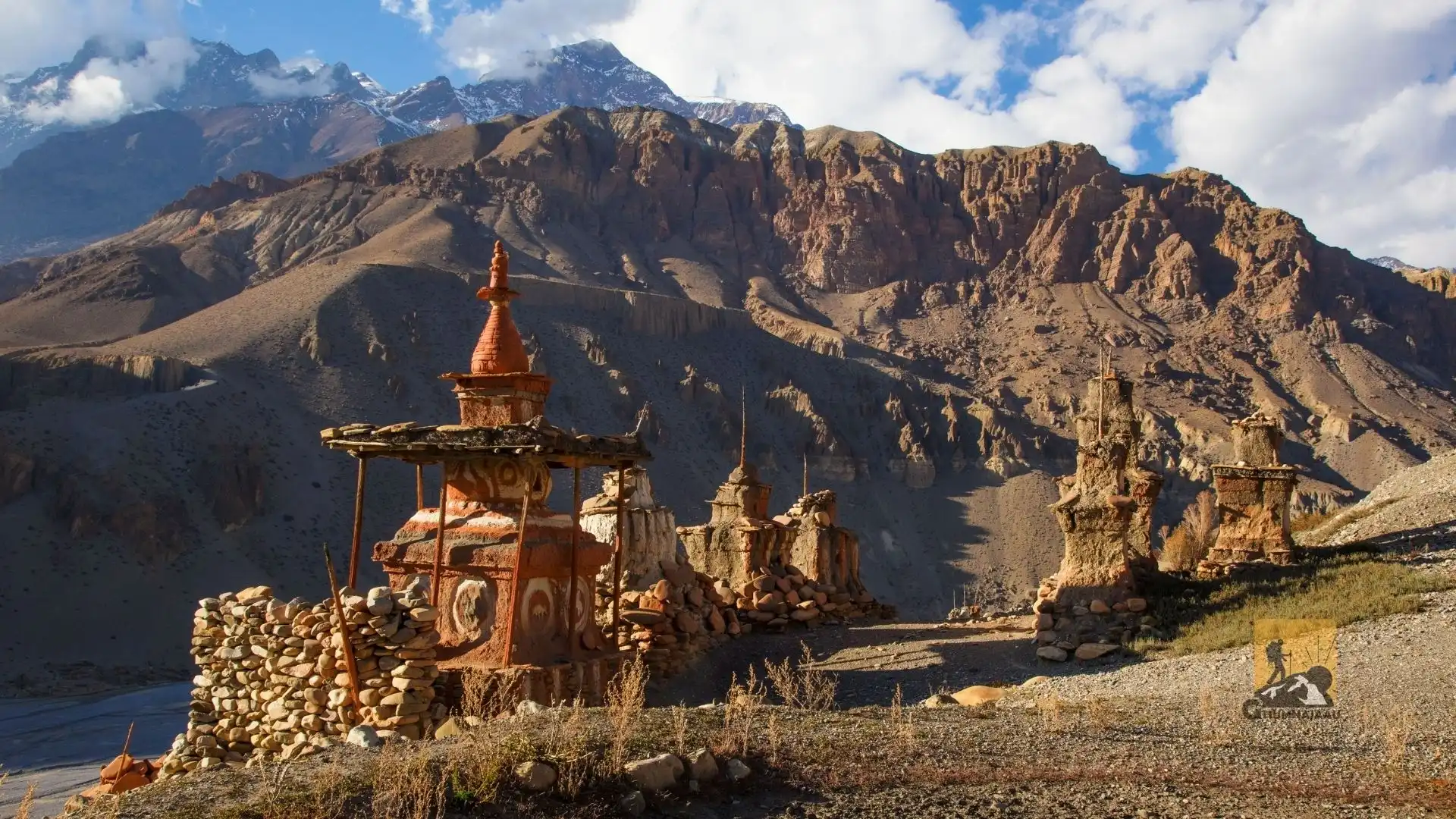
Important cultural landmarks include:
The region’s rich spiritual atmosphere makes this trek culturally rewarding as well as visually stunning.
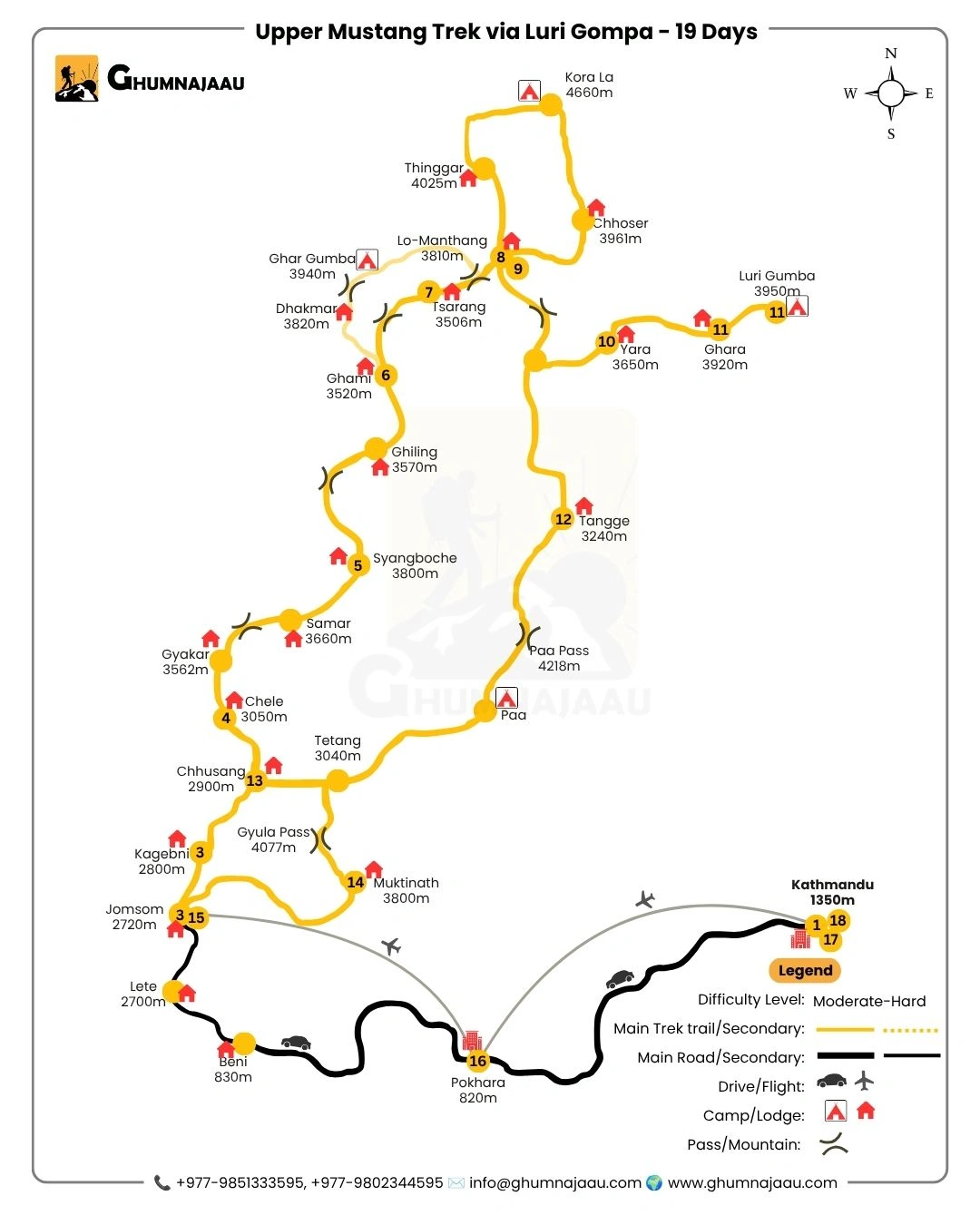
The journey starts with a tourist bus or private vehicle drive from Kathmandu to Pokhara, covering approximately 200 km in 6–7 hours.
From Pokhara, a scenic domestic flight takes travelers to Jomsom in around 20–25 minutes. The trekking adventure begins from Jomsom and follows a circular route through Upper Mustang before returning to Jomsom.
After the trek:
Transportation includes scenic Himalayan flights, mountain roads, and trekking trails through remote villages.
Required permits:
Experienced Local Guides
Our professional trekking guides have extensive knowledge of Upper Mustang’s culture, trails, and mountain safety.
Safety First Approach
We prioritize acclimatization, emergency preparedness, and personalized trekking support throughout the journey.
Authentic Local Experience
We connect travelers with genuine Himalayan culture, local communities, and hidden destinations.
Excellent Customer Support
From trip planning to final departure, our team provides complete travel assistance and quick communication.
Responsible Tourism
We support eco-friendly trekking, local businesses, and sustainable tourism practices in the Himalayas.
Join Ghumnajaau for an unforgettable Himalayan journey filled with adventure, spirituality, and authentic local experiences. Contact us today for customized itineraries, private departures, and special group offers.
Upon arrival at Tribhuvan International Airport in Kathmandu, We're grateful for the warm welcome extended by our official. We will take you to the hotel in our private tourist vehicle. Pre-trip meeting will be done and you will meet with your trip guide. Make sure to confirm your queries about trekking in the mountains.
Your trekking staff will ensure a smooth transition for you from the hotel to the tourist bus station, beginning your journey to Pokhara at around 7:30 am. Pokhara, often hailed as the gateway to the Annapurna region, is a picturesque valley nestled beside the tranquil Phewa Lake.
Renowned for its breathtaking views, Pokhara offers panoramic vistas of iconic Himalayan peaks like Annapurna and Machapuchare to the north, Dhaulagiri to the west, and Lamjung Himal and Manaslu to the east.
Compared to the bustling energy of Kathmandu, Pokhara is smaller and more serene, making it an ideal starting point for your Annapurna Base Camp (Annapurna Santuary) trekking adventure. With its tranquil setting and proximity to the majestic Himalayas, Pokhara sets the stage for an unforgettable journey into the heart of the Annapurna regio
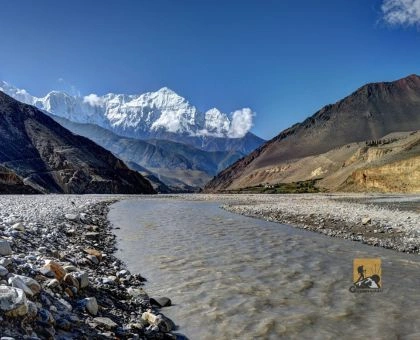
Early in the morning, we will fly to Jomsom. The flight is 25 minutes on a scenic flight view of Spectaculars Mountains. We start the first-day trekking from Jomsom (2713m) to Kagbeni (2897m) after breakfast. The trail follows the wide valley of the Kali Gandaki. Here the wind generally picks up after about midday but will at least be blowing at our backs as you head up to ancient village Kagbeni in the morning time. The rest of the day we will explore the village, people, and culture.
Our journey begins with a special permit check-up and onwards to the riverbank of Kaligandaki River up to the valley. During today’s walk, the trail leads us through the picturesque deserted and windswept valleys. This trail continues up and downhill until we reach the Tangbe village. From here we trek onwards to Chhusang and after a 1½ hour walk, we cross a river heading up to the huge red chunk of conglomerate that has fallen from the cliff above. The trail continues heading on to small ridges until we reach the Chele village (3050m) after 18 kilometers. Here we will stay overnight at a local tea house.
Today, we start our trek again after breakfast and walk further to Ekle Bhatti then climb to Taklam La Pass (3,624m) and Dajori La (3,735m) through a narrow stretch of the plateau with views of Tilicho Peak, Yakawa Kang, Nilgiri, and Damodar Danda. After lunch in Samar, we walk further for about three hours including passes through the Bhena La (3,860m) and Yamda La (3,850m) to the Syanbochen elevation at 3,840 meters. The trail today is 8 kilometers long. The rest of the day explores surrounding ancient unique village area. We stay again at a teahouse overnight.
The trail leads us uphill to the Syangboche La (3,860m) and passed a few teahouses, Chortens (Tibetan Stupa), and local villages with Tibetan-style houses. We then cross over a few other paths. After lunch, we have a long climb to the Nyi Pass (4,010m) and Ghami La (3,765m) with a wonderful landscape view. Then we descend to Ghaymi (3,520m) for an overnight stay at the tea house, after 12 kilometers of walking.
After breakfast, we start our trek on a pleasant and easy trail which we’ll walk for about 4 to 5 hours up to Charang (3,560m). Then after crossing Ghaymi Khola, the trail climbs to a plateau and passes beside a very long Mani wall (Mantra inscribed stone walls) which heads east to Tsarang. After about 11 kilometers up and down the trail get us to the teahouse in Charang, where we will stay overnight. We will enjoy exploring around the ancient village for the rest of the day. You may go to Ghar Gumpa via Mui La (4,170m) from Dhakmar skip Charang Village.
The trail leads us to Lo-Mangthang with a majestic view of Nilgiri, Tilicho, Annapurna I, and Bhrikuti. The landscape scenery is absolutely fascinating. At first, the trail descends to Tsarang Chu Canyon and then climbs steeply up after crossing the river. Then the trail further ascends gently to the windy pass of Lo La (3,950m), from where you can see the Lo-Mangthang valley (3,810m) while views of the walled city appear magnificently amongst its hills. All of this takes place right next to the Tibetan border. We will stay overnight at a local hotel. The rest of the time can be spent exploring the surrounding areas which are almost identical to Tibet and Tibetan culture.
Today is your special day to explore around Lo-Mangthan. You first explore the surrounding Namgyal Gomba monastery situated on a hilltop, which serves as an important monastery of the local community and also as a local court. After visiting Namgyal Gompa (3,910m) continue the hike to Tingkhar (4,025m), which is a village of around 40 houses, the last main village to the northwest of Lo-Mangthang. After finishing your visit stroll back to the hotel. You have another option to visit the Chamjung and Lhaktung Gumba, the red Thugchen monastery, Chyodi Gomba are in the entrance hall which are the main attractions of Lo Mangthang. Besides this, you may visit the four-story building of the Raja's Darbar (Royal Place) as well as the surrounding panoramic views of the Himalaya, where the Lo Mangthang Ex: King -Jigme Prabal Bista (25th King of the Upper Mustang Kingdom) offers you Tibetan tea as a sigh of his hospitality.
Lo Manthang is known as a walled city also, it is believed to be built in 1380 AD by the first King of Lo ‘Ame Pal’. The wall which is 2422 feet (725m) long and 26 feet (about 8 m) high have a series of 14 towers along its border. The towers rise 40 feet (12m) high, 6 feet (2m) wide at the base, and 3 feet (1m) wide at the top. During the regimes of the Mustang King, the towers were guarded by armed guards to defend the town from enemies. This day you may visit the Namgyal ‘The Monastery of Victory’, Tinker ‘summer palace of Mustangs King’, Choser Valley ‘famous for cave culture’ and Luri Gumba ‘built inside the rock’ are other major attractions of Upper Mustang. Choser Cave is a spectacular multi-storied cave building with 42 rooms, which is an example of ancient human civilization and their tradition and to get in cave Gumba it takes about 1 ½ to 2-hour walk away from Lo Manthang or you have option pony trek or hire a motorbike or any Vehicles for 45 minutes. There are other many hidden treasures around the Chooser Village where you may explore as well if not too tired.
Today's trek on the Upper Mustang Trail takes us to Dhi La Pass (3,950 m), offering a stunning view of Lho Manthang village. We then descend to Dhi village, cross a small river, and ascend to Yara village, known for its caves on stone walls.
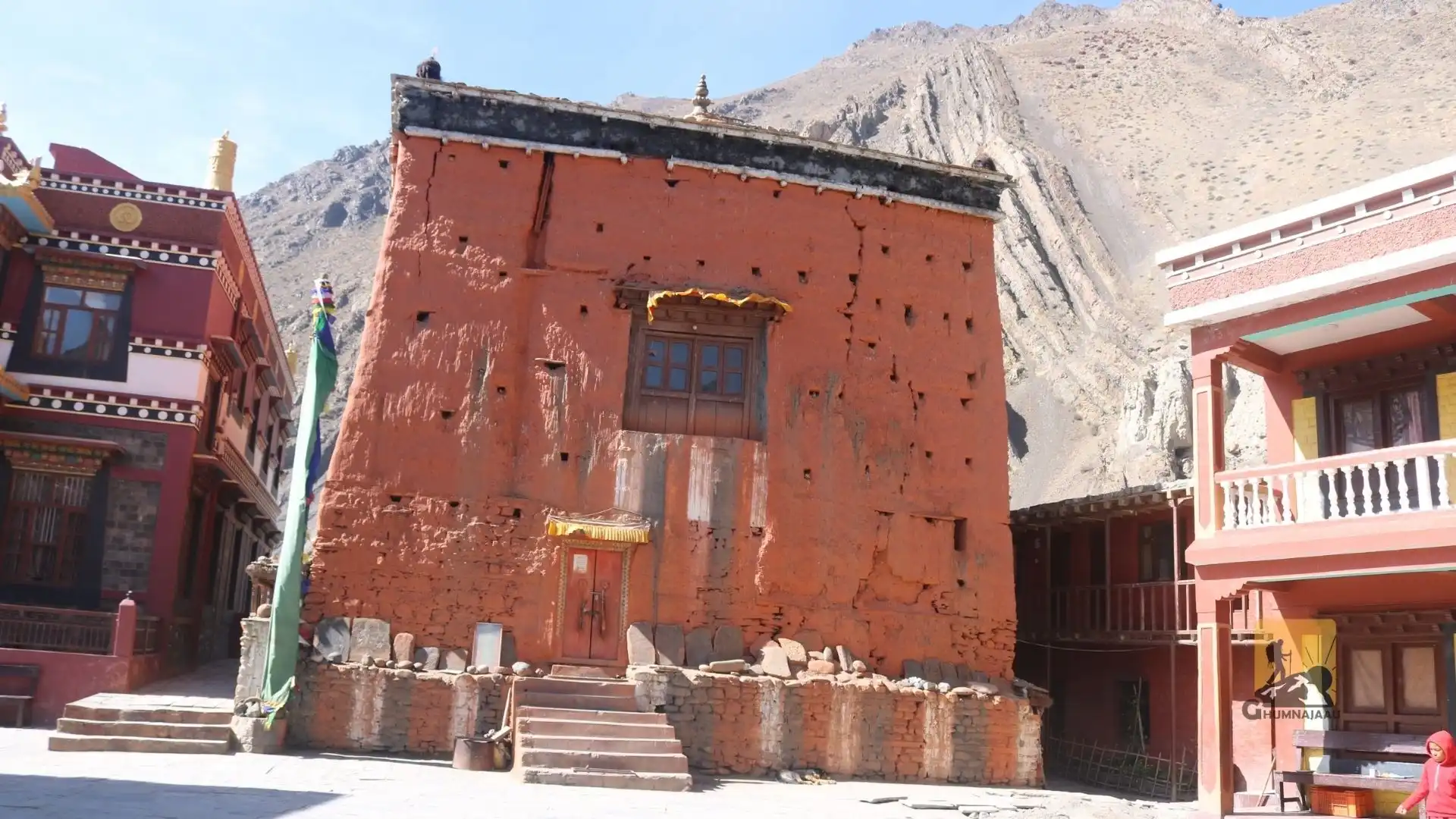
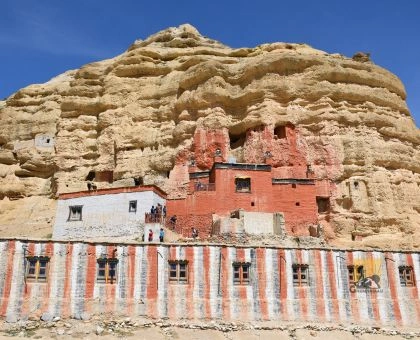
Today, we opt to extend our stay in Yara to explore the renowned Luri Gompa, also known as Luri Cave. Our journey begins with a gradual ascent along a scenic trail that meanders alongside a river. Dating back to the 14th century, Luri Gompa holds significant religious importance in Tibetan Buddhism and is adorned with some of the oldest and most exquisite Buddhist mural paintings in the Mustang Region. Perched atop a 100-meter-high cliff, the Gompa, covered in a striking red wash, stands as a testament to the region's rich cultural heritage and spiritual legacy.
Today's journey begins with an early start, as we anticipate crossing a river that swells in the heat of the day. Descending to the Dhechyang Khola, we traverse a landscape where the river often reveals blackened rocks, known as Shaligram fossils. Continuing our ascent, we reach the Serthang Pass at 3,975 meters, offering breathtaking views of majestic peaks, including Dhaulagiri and Nilgiri. After soaking in the scenery, we descend through several tiers of barren brown terrain before reaching the village of Tangge.
Today's trek is a demanding one as we make our way to Chusang village, also known as Tetang. Beginning early in the morning, we descend along a winding trail before ascending to a pass at 4,150 meters, crossing the Yak Khola along the way. Following the pass, we descend to Paha, where we pause to enjoy a well-deserved lunch.
The journey from Paha to Chusang proves to be long and challenging, as we navigate from one hill to another. After reaching the Cha Cha Pass at 4,040 meters, we begin our descent into the valley of Narshing Khola, eventually arriving at the picturesque Chusang village. Despite the difficulty of the terrain, the stunning landscapes and the promise of reaching our destination keep us motivated throughout the day's trek.
Our trek today commences with an ascent along a winding trail leading to the Gyula Pass, situated at an elevation of 4,077 meters. From this vantage point, we are treated to a breathtaking panoramic vista encompassing the majestic peaks of the Annapurna and Dhaulagiri ranges, a sight to behold and cherish.
Continuing our journey, we traverse through the picturesque villages of Jhong and Thinkar, each offering glimpses into the traditional lifestyles and cultural richness of the region. As we press on towards our destination, the allure of Muktinath beckons, promising both spiritual fulfillment and awe-inspiring natural beauty along the way.
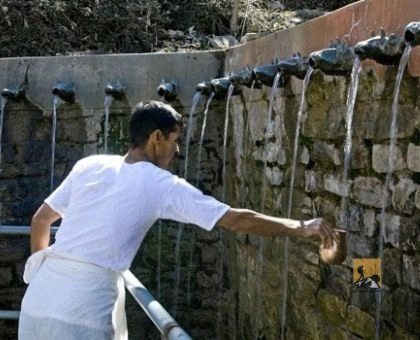
In the morning, we visit Sacred Muktinath Temple dedicated to Lord Vishnu which is a famous pilgrimage site for both Hindus and Buddhists. In one of the Temple complex, a sacred fire and spring of water glows from the ground. It is believed that who takes a bath in 108 taps within the premises suppose to be pure. After visiting Temple, we start walking down with beautiful landscape crossing Jharkot and Kagbeni to Jomsom.
After early breakfast, we walk to airport and fly back to Pokhara. You can rest whole day in Pokhara. In the evening, you can walk around Lakeside Bazaar.
We will be driving back to Kathmandu in the morning. In the evening, we host a farewell dinner in a fine restaurant. (Your guide(s) and an office staff will accompany you).
It’s the end of our exciting journey in the Mustang region (Annapurna region). Today we conclude our 18 day Upper Mustang with Luri gompa. One of our airport representatives will accompany you to the International Airport for your flight back home.
We bid you farewell, and hoping you’ll travel to Nepal again.
This trek is considered moderate to strenuous due to high altitude, long walking days, and remote terrain.
Previous trekking experience is helpful but not compulsory. Good physical fitness is recommended.ecommended.
The highest elevation reached during the trek is approximately 4,300 meters near the high passes and Luri Gompa area.strongly recommended.
Yes. Upper Mustang lies in a rain-shadow area, making it one of the best monsoon trekking destinations in Nepal.
Trekkers need:
No reliable ATM services are available in Upper Mustang. Carry enough Nepali cash before starting the trek.
Basic Wi-Fi is available in some villages and teahouses, but connections may be slow or unreliable.
Accommodation includes local teahouses and lodges with simple twin-sharing rooms and basic facilities.
Yes, charging facilities are available in most lodges for an additional fee.
Yes. Travel insurance covering high-altitude trekking and emergency helicopter evacuation is strongly recommended.