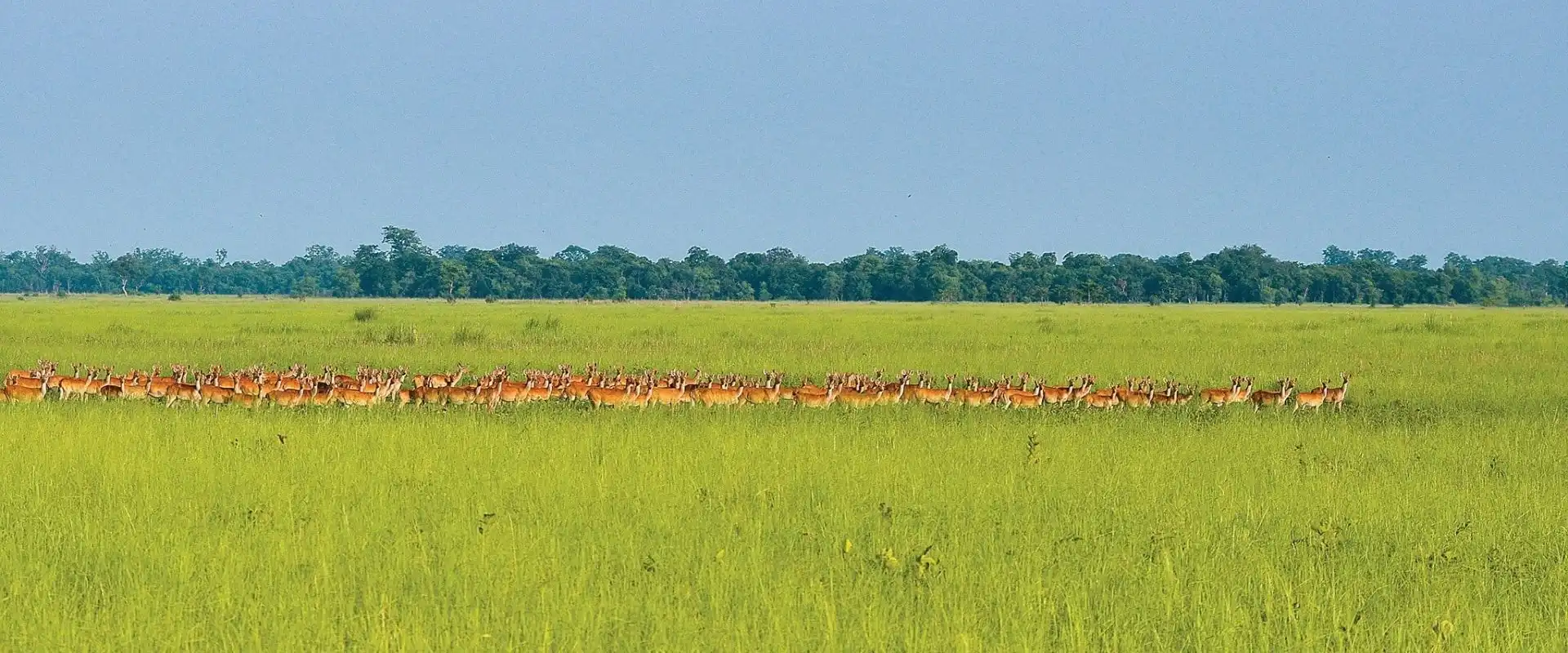
Shuklaphanta National Park is located in the extreme southwestern corner of Nepal in Kanchanpur District, Sudurpashchim Province, bordering India’s Uttarakhand state. The park lies in the Terai lowlands and is one of Nepal’s most ecologically important grassland and wetland ecosystems.
Originally established as a wildlife reserve and later upgraded to a national park in 2017, Shuklaphanta was initially much smaller in area. After its official expansion, the protected area now covers approximately 305 sq. km, making it a significantly larger and more ecologically diverse conservation landscape than before. This expansion strengthened habitat protection for endangered species such as swamp deer and Bengal florican, while also improving ecological connectivity with surrounding forest corridors.
Shuklaphanta is known for its vast open grasslands (locally called phanta), dense Sal forests, wetlands, and riverine ecosystems that create a perfect habitat for rich biodiversity and year-round wildlife activity.
Shuklaphanta offers one of Nepal’s most authentic and less-crowded jungle safari experiences:
Home to around 350 bird species, Shuklaphanta is a top destination for bird enthusiasts:
The park features a unique ecological blend:
This diversity makes it one of Nepal’s most productive wildlife zones.
Visitors can stay in:
Permits are issued at Majhgaon, Kanchanpur headquarters.
With Ghumnajaau, explore Shuklaphanta through:
Discover Nepal’s untouched wilderness in its most natural form.
We create unforgettable trips, customized for your group.