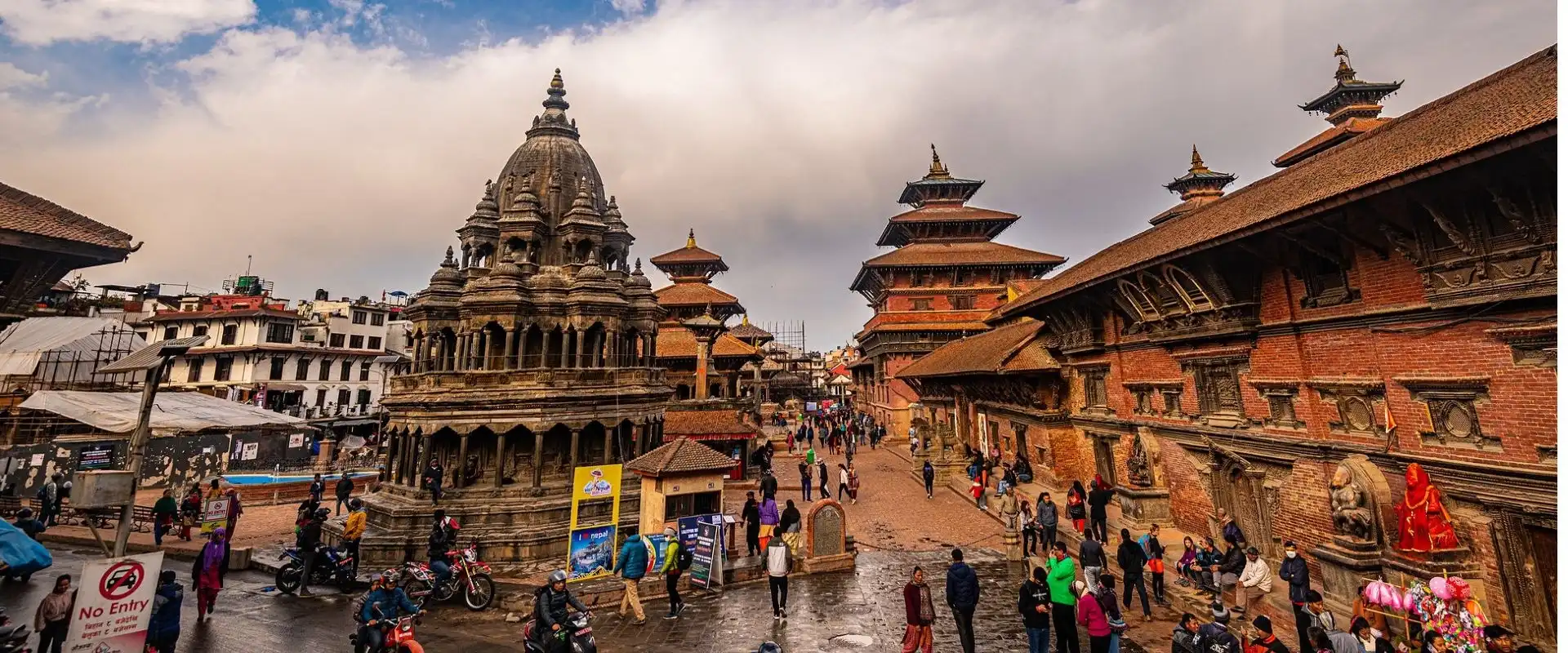
It is Just 5 km southeast of Kathmandu lies Patan, also known as Lalitpur the “City of Beauty and Artisans.” Famous for its timeless craftsmanship, ancient temples, and harmonious blend of Hindu and Buddhist traditions, Patan is one of the most culturally rich destinations in Nepal.
This historic city is not just a place to visit and it is a living museum where art, culture, and spirituality still thrive in everyday life.
Patan is home to the valley’s finest craftsmen who have preserved ancient techniques of metal crafting, including:
As you walk through its narrow streets, the rhythmic sound of hammering metal and carving wood fills the air—reminding visitors that Patan is still very much alive with artistic tradition.
At the heart of the city lies Patan Durbar Square, a stunning UNESCO World Heritage Site and former royal palace complex of the Malla kings.
This square is a masterpiece of Newari architecture, featuring:
Highlights inside the Square
The Krishna Temple, built entirely of stone, is considered the first Shikhara-style temple in Nepal and remains one of its most iconic structures.
Mahabouddha Temple
Located east of Durbar Square, Mahabouddha Temple is a unique Buddhist monument known for its intricate terracotta design.
Often called the “Temple of a Thousand Buddhas,” it features thousands of tiny Buddha images engraved into its structure, making it a true architectural masterpiece.
Rudra Varna Mahavihar (Uku Bahal)
Just a short walk from Mahabouddha lies Rudra Varna Mahavihar, one of the most important Buddhist monasteries in Patan.
Key highlights:
Even today, offerings from devotees fill this monastery, preserving its spiritual importance.
Hiranya Varna Mahavihar (Golden Temple)
Hiranya Varna Mahavihar, also known as the Golden Temple, is one of Patan’s most beautiful Buddhist monasteries.
Dating back to the 12th century, it is famous for:
This hidden gem offers a serene escape from the busy city streets.
Kumbheshwar Temple
The five-storied pagoda-style Kumbheshwar Temple is one of the oldest and most sacred Shiva temples in Patan.
Highlights:
Thousands of devotees gather here every year for ritual bathing.
Jagat Narayan Temple
Situated on the banks of the Bagmati River, Jagat Narayan Temple is a peaceful Shikhara-style temple dedicated to Lord Vishnu.
Features:
It offers a quiet spiritual atmosphere away from the city center.
Ashoka Stupas – Ancient Buddhist Legacy
Around Patan lie four ancient stupas believed to be built by Emperor Ashoka around 250 BC, marking the four corners of the ancient city:
These structures represent the early spread of Buddhism in the Kathmandu Valley.
Tibetan Camp – Handicrafts & Culture
On the outskirts of Patan, the Tibetan Camp is a vibrant cultural spot known for:
It also features a stupa and small shrines, making it a blend of commerce and spirituality.
Patan Industrial Estate (Living Craft Heritage)
Located near Lagankhel, the Patan Industrial Estate showcases the continuation of traditional craftsmanship.
Here you can find:
A small shopping arcade allows visitors to directly purchase authentic Nepali handicrafts.
A visit to Patan offers more than sightseeing—it offers immersion into a living heritage city where:
Plan Your Patan Experience with Ghumnajaau
👉 Patan Travel Guide (Itinerary, Tips & Attractions)
We create unforgettable trips, customized for your group.