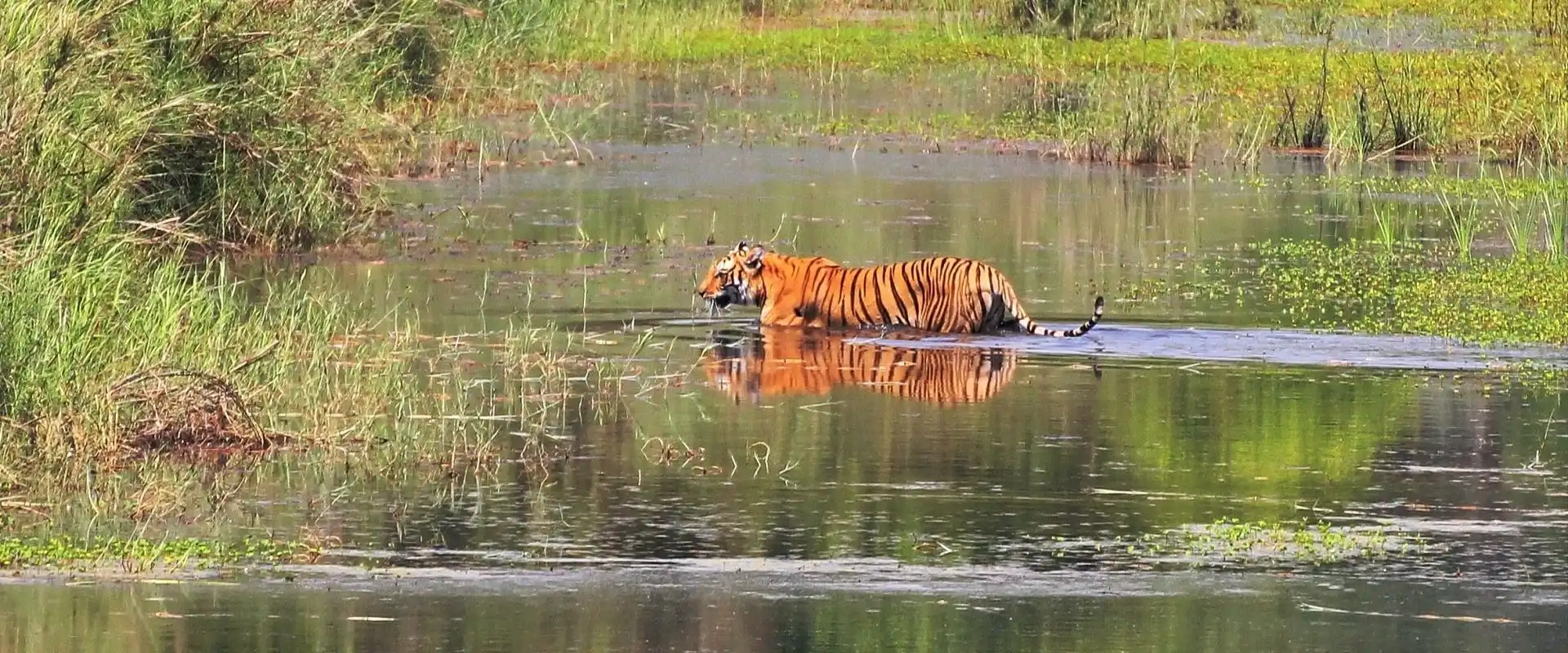
Bardiya National Park is one of Nepal’s most pristine and less-crowded wilderness destinations, offering an authentic jungle experience in the heart of the western Terai. Known for its vast Sal forests, open grasslands, and rich riverine ecosystems, Bardiya is a paradise for wildlife lovers, photographers, and adventure seekers looking for raw nature away from the busy trekking routes.
Covering approximately 968 square kilometers (including buffer zone), Bardiya is one of the largest protected areas in Nepal. It lies in the Lumbini Province, extending across Bardiya District and parts of surrounding landscapes such as Banke and Surkhet. The park is ecologically connected to the fertile floodplains of the Karnali River, which plays a vital role in sustaining its diverse wildlife and seasonal animal movement corridors.
Strategically located about 585 km west of Kathmandu, Bardiya is most commonly accessed via Nepalgunj, the main gateway city in western Nepal. From Nepalgunj, the park is roughly 90 - 100 km northwest, reached through a scenic drive passing rural villages, farmlands, and forested terrain leading to Thakurdwara, the main entrance and administrative hub of the park. This location places Bardiya in a unique ecological transition zone between the Himalayan foothills and the Indo-Gangetic plains, making it one of the most biologically rich and diverse ecosystems in Nepal.
With its untouched wilderness, rare wildlife sightings, and peaceful natural surroundings, Bardiya National Park stands as one of Nepal’s finest safari destination offering a truly immersive jungle adventure in the wild west.
Reaching Bardiya is an adventure in itself:
Direct buses and private vehicles are also available from major cities like Kathmandu and Pokhara
Bardiya National Park is one of Nepal’s richest biodiversity hotspots, home to several iconic and endangered species that thrive in its diverse ecosystems of forests, grasslands, and river systems.
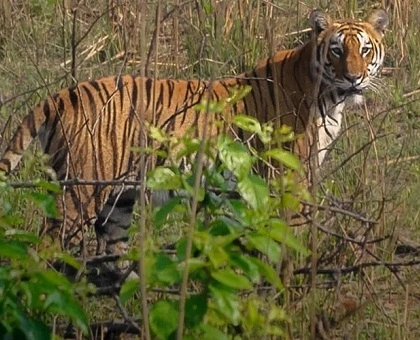
The park supports a remarkable range of mammals, including the elusive Royal Bengal Tiger, One-horned Rhinoceros, Asian Elephant, Swamp Deer, Black Buck, and other species such as wild boar and different types of deer. These animals roam freely across the park’s dense Sal forests and open grasslands, making Bardiya one of the best places in Nepal for wildlife sightings.
Its reptile and aquatic life is equally impressive, with species like the Gharial Crocodile, Marsh Mugger Crocodile, and the rare Gangetic Dolphin found in the nearby Karnali River system, which flows along the park’s ecological corridor.
For bird enthusiasts, Bardiya is a paradise with more than 230 bird species, including the endangered Bengal Florican, elegant Sarus Crane, Lesser Florican, along with a wide variety of migratory and resident birds that make the park a year-round birdwatching destination.
The park’s vegetation and ecosystem further enhance its ecological value, featuring dense Sal forests, open savannah grasslands, and lush riverine forests along water channels. These interconnected habitats create an ideal environment that supports large mammals, birds, and aquatic life, making Bardiya one of Nepal’s most complete and thriving wilderness ecosystems.
Comfortable jungle lodges and eco-resorts are available around Thakurdwara and buffer zone areas, offering:
Nepali: NPR 50 per day
SAARC Nationals: NPR 500 per day
Foreigners: NPR 1,000 per day
With Ghumnajaau, you experience Bardiya beyond tourism:
Stay at least 2–3 nights to increase your chances of spotting tigers and rare wildlife. Early morning and late afternoon safaris are most rewarding.
Bardiya National Park is not just a destination—it’s a raw, untouched wilderness where nature still rules. From tiger trails to dolphin waters, every moment is an unforgettable encounter with the wild.
👉 Plan your Bardiya adventure with Ghumnajaau and step into Nepal’s wild heart.
We create unforgettable trips, customized for your group.