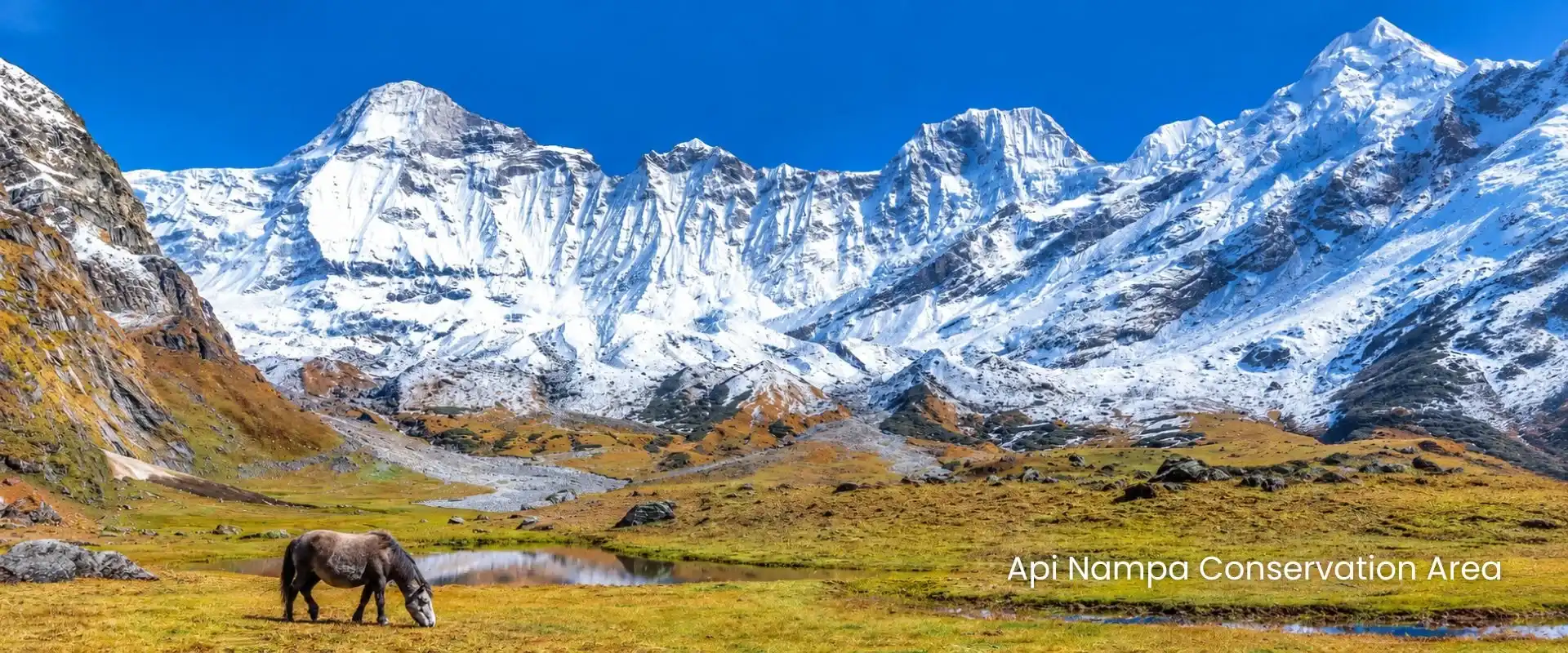
Api Nampa Conservation Area lies in Darchula District, in the far northwest corner of Nepal, along the borders with India and Tibet (China). Established in 2010 and covering about 1,900 km², it protects high Himalayan valleys, forests, alpine pastures and glaciers beneath two major peaks: Api Himal (7,132 m) and Nampa (6,929 m).
This is one of the least visited trekking regions in Nepal. Trails are demanding, villages are small and services are limited. For experienced trekkers who want wild scenery, genuine solitude and living mountain culture, that is exactly the appeal.
| Location | archula District, Sudurpashchim Province, far-west Nepal |
| Established | 2010 |
| Area | About 1,900 km² |
| Main peaks | Api Himal (7,132 m), Nampa (6,929 m) |
| Best time | September to November and April to early June |
| Difficulty | Challenging, remote, mostly camping-based |
| Typical trek length | 10 to 14 days, plus travel to and from Darchula |
| Good for | Experienced trekkers, culture seekers, wilderness lovers |
Many trekkers search for the "Api Saipal trek". Mount Saipal (7,031 m) is in Bajhang District, so it is usually approached from the Bajhang side, not from inside Api Nampa. The two peaks are neighbours in the far west, and some itineraries cover both regions, but they are separate trekking areas with different access routes. Ghumnajaau can help you choose the right one.
The route through Simikot, Dharapuri and Kermi is in Humla District. It leads to the Humla region, not to Api Nampa.
A typical Api Nampa trek takes 10 to 14 days, plus travel days. We plan each route around your fitness, the season and the latest trail conditions.
Expect simple village lodging in some places and camping in most others. Meals are basic: rice, dal, local vegetables and potatoes. On longer sections, a trekking crew carries food, tents and cooking supplies.
Every Api Nampa trek needs a conservation area entry permit. A Restricted Area Permit (RAP) is needed only if your route crosses border-sensitive zones such as Byans or Tinkar.
|
Permit |
Foreign nationals |
SAARC nationals |
Nepali citizens |
|
Api Nampa Conservation Area permit |
NPR 3,000 (about US$21–23) |
NPR 1,500 (about US$10) |
NPR 100 |
|
Restricted Area Permit, first 7 days |
US$90 per person (or NPR 13,037) |
US$75 per person (or NPR 10,864) |
Exempt |
|
Restricted Area Permit, each extra day |
US$15 per person |
US$10 per person |
Exempt |
|
TIMS card |
NPR 2,000, only if requested |
Not usually required |
Not usually required |
TIMS is generally not mandatory on the base camp route, though it is sometimes requested. Fees and rules can change, so Ghumnajaau confirms current requirements and arranges all permits before you travel.
Ready for one of Nepal's last truly wild trekking regions? Contact Ghumnajaau for a carefully planned Api Nampa trek with experienced guides, permits and safety support.

We create unforgettable trips, customized for your group.