Upper Mustang Travel Guide 2026/27: The Complete Guide to Nepal’s Hidden Himalayan Kingdom

Upper Mustang Travel Guide 2026/27: The Complete Guide to Nepal’s Hidden Himalayan Kingdom
Oct 7, 2026 Nir Saru
This Upper Mustang Travel Guide 2026/27 explains what you need to know before travelling - including routes, permits, transport, seasons, altitude, accommodation, food, safety, packing and responsible travel.

There are places in Nepal where the journey feels like travel through a different world. Upper Mustang is one of them.


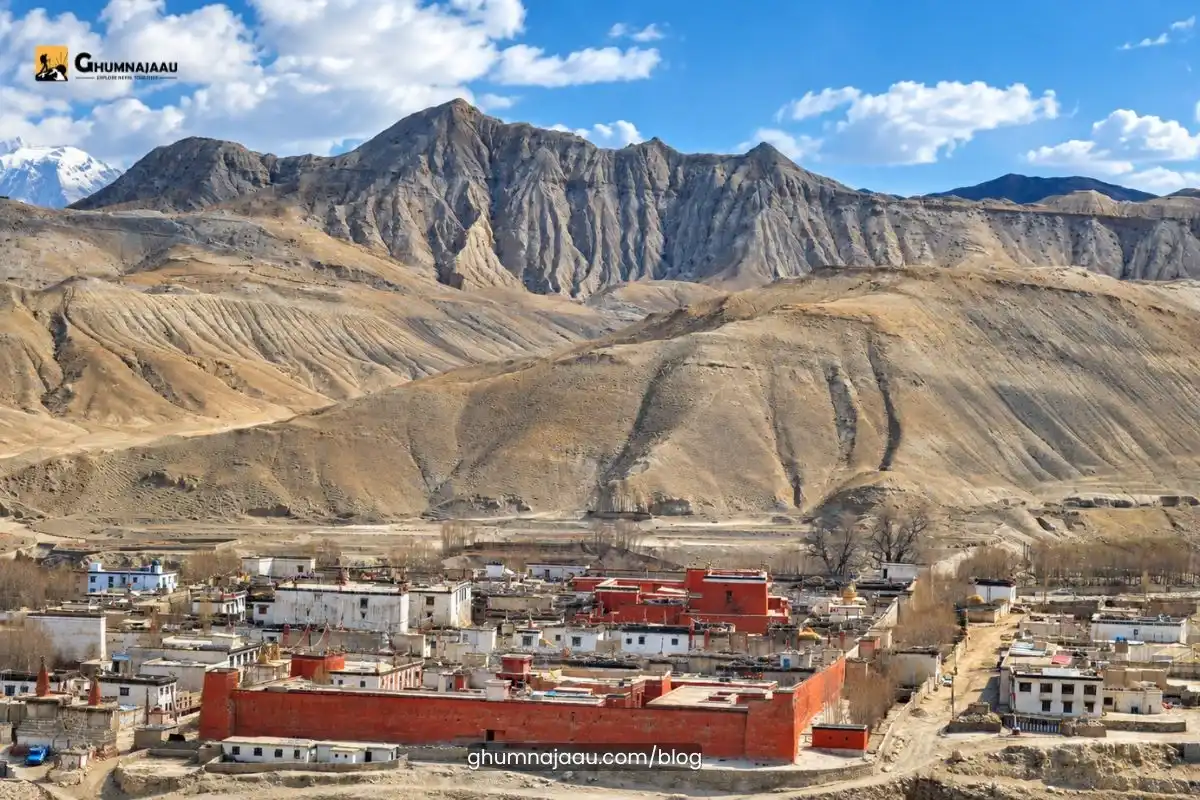
Beyond the dramatic Kali Gandaki Valley, north of Kagbeni, the landscape changes from green Himalayan valleys to vast cliffs, wind-carved hills, ochre rock formations, ancient villages and high-altitude desert. Walled settlements, centuries-old monasteries, caves and Tibetan-influenced traditions make the region as culturally fascinating as it is visually spectacular.


For travelers’ looking beyond the more crowded Himalayan trails, an Upper Mustang Travel Guide is the perfect starting point. Whether you are planning a multi-day trek, a private jeep journey, a photography trip, a family adventure or a cultural exploration, Mustang offers a rare combination of landscape, history and living heritage.


This Upper Mustang Travel Guide 2026/27 explains what you need to know before travelling - including routes, permits, transport, seasons, altitude, accommodation, food, safety, packing and responsible travel.

Upper Mustang at a Glance

Category

Information

Main gateway

Jomsom / Kagbeni

Main cultural centre

Lo Manthang

Landscape

Trans-Himalayan high-altitude desert

Approx. altitude

Kagbeni 2,800 m; Lo Manthang roughly 3,800, Kora La 4660 m depending on reference

Region

Mustang District, north-central Nepal

Special status

Restricted Area

Main attraction

Lo Manthang and the ancient Kingdom of Lo

Best trekking seasons

Spring and autumn; monsoon is also possible because of the rain-shadow location

Typical trekking duration

Around 10–14+ days depending on route and transport

Difficulty

Moderate, with altitude, wind, dry terrain and long walking days

Transportation

Kali Gandaki Corridor: Most Upper Mustang villages are now accessible by motorable jeep roads, including routes towards the Nepal–China border.

Accommodation

Local lodges, guesthouses and teahouses; availability varies by route

Main activities

Trekking, jeep tours, Motorbike tours, photography, cultural exploration, monastery visits

Key permit

Upper Mustang Restricted Area Permit for foreign visitors

Conservation area

Annapurna Conservation Area


Upper Mustang is a remarkable trans-Himalayan destination known for its dramatic landscapes, ancient monasteries, and strong Tibetan cultural heritage. Following the traditional approach route, travelers can reach Lo Manthang in approximately four days, with an additional day recommended to explore the historic walled city, its monasteries, narrow lanes, and unique cultural heritage.

Where Is Upper Mustang?

Upper Mustang lies in the northern part of Mustang District in north-central Nepal, behind the Annapurna and Dhaulagiri mountain ranges.


The journey normally begins around Jomsom and Kagbeni, following the upper Kali Gandaki Valley towards Lo Manthang.


Kagbeni is particularly important because it marks the traditional gateway to Upper Mustang. From here, travelers enter the restricted Upper Mustang area.


Geographically, Mustang sits in the rain shadow of the Himalaya. While much of Nepal receives heavy monsoon rainfall, the northern Mustang landscape remains comparatively dry. This unusual geography is one reason the region has its distinctive desert-like appearance.

Why Visit Upper Mustang?

Upper Mustang is not simply another Himalayan trekking destination.

It is a journey into a landscape where nature, history, religion and traditional mountain life remain closely connected.


1. The legendary Lo Manthang

The walled settlement of Lo Manthang is the cultural heart of Upper Mustang and the former capital of the Kingdom of Lo.


The settlement contains historic monasteries, traditional buildings and narrow lanes that reflect centuries of Tibetan-influenced Himalayan culture.


Nepal identifies Lo Manthang as a former principality and notes the historic monastery tradition within the walled city.


2. A Himalayan desert landscape

Expect something very different from the lush forests and rhododendron trails found elsewhere in Nepal.

Upper Mustang is characterized by:

✔ Red, brown and ochre cliffs

✔ Dry river valleys

✔ Wind-eroded rock formations

✔ High plateaus

✔ Deep gorges

✔ Sparse vegetation

✔ Traditional mud-brick villages

✔ Dramatic Himalayan horizons

✔ The result is an almost other-worldly landscape.


3. Ancient Buddhist culture

Upper Mustang has a strong Tibetan Buddhist cultural heritage.

Monasteries, prayer walls, chortens, mani stones, traditional homes and religious artwork are integral parts of village life.


Travelers should remember that these are not simply tourist attractions. Many remain active religious and community spaces.


4. Ancient caves and archaeological heritage

The cliffs around Upper Mustang contain numerous caves and archaeological sites.

The caves around Lo Manthang, including Luri and Tashi Kabum, containing ancient murals and chortens dating back centuries.


Access to particular caves can be restricted or dependent on local conditions, so travelers should follow their guide and local authorities.


5. Tiji Festival

One of the most fascinating cultural experiences in Lo Manthang is the Tiji Festival, a major Buddhist celebration featuring sacred dances and rituals.


It explains that the festival is based on Vajrakila-related Buddhist practice and is traditionally held annually according to the Tibetan calendar.


If you want to travel specifically for Tiji, check the officially announced dates for the relevant year before booking flights, accommodation and permits.

Upper Mustang Trek Guide: What Is the Experience Like?

An Upper Mustang Trek Guide should prepare you for something different from a conventional Himalayan trek.

The challenge is not primarily extreme technical climbing. Instead, you have to deal with:

✔ High altitude

✔ Dry air

✔ Strong winds

✔ Dust

✔ Sun exposure

✔ Rocky trails

✔ Long walking days

✔ Limited services in some areas

✔ Rapid changes in weather

✔ Cold mornings and evenings


It describes the trek as not particularly difficult in terms of maximum altitude but warns that weather conditions can be challenging, particularly because Mustang is cold in winter and windy throughout the year.


Who can do the trek?

A reasonably fit traveler with preparation can undertake the classic route.

However, you should not judge the trek only by its highest elevation. Altitude acclimatization, walking duration, weather and remoteness matter.


Families with older children, students and first-time Himalayan trekkers may also visit Upper Mustang, but itineraries should be adjusted according to fitness, age, health and available transport.

Upper Mustang Altitude

Altitude is an important part of planning your journey.

Some commonly referenced elevations include:


Location

Approx. elevation

Jomsom

2,720 m

Kagbeni

2,800 m

Muktinath

around 3,800 m

Lo Manthang

approximately 3,800–4,000 m

Chhoser -Kora La

approximately 4000-4660m


Published sources vary slightly for individual locations and route points, so exact elevations should be treated as approximate.


Nepal Tourism Board lists Kagbeni at 2,804 m and Lo Manthang at around 4,000 m on one of its destination pages, while its Upper Mustang trekking information refers to approximately 3,800 m as the highest point reached on the trek.


Altitude sickness

Altitude sickness can affect anyone, regardless of age or fitness. Take altitude seriously. Watch for symptoms such as:

✔Headache

✔Unusual fatigue

✔Dizziness

✔Loss of appetite

✔Nausea

✔Difficulty sleeping

✔Shortness of breath


If symptoms become severe or worsen, do not continue ascending. Inform your guide immediately and descend if advised.

Upper Mustang Travel Route

A classic journey can follow the route:

Pokhara → Jomsom → Kagbeni → Chele → Syangboche → Ghami → Tsarang → Lo Manthang


Depending on the itinerary, travelers may continue towards areas such as Chhoser and other settlements before returning through a different or similar route.


The precise itinerary can vary significantly depending on:

 ☐ Trekking or jeep travel

 ☐ Road conditions

 ☐ Weather

 ☐ Group fitness

 ☐ Permit duration

 ☐ Side trips

 ☐ Accommodation availability

 ☐ Local conditions

Suggested Upper Mustang Trek Itinerary

The following is a representative itinerary, not a fixed timetable. Actual walking hours and overnight stops should be confirmed before departure.


Day 1: Travel from Kathmandu to Pokhara | Overnight in Pokhara.

Why stay: Pokhara provides an opportunity to rest and prepare before entering the mountain region.


Day 2: Pokhara to Jomsom | Travel towards Jomsom by available flight or road transport.

The flight option is particularly dependent on weather and operational conditions. Overnight around Jomsom.


Day 3: Jomsom to Kagbeni | Continue towards Kagbeni.

Kagbeni is an important historical settlement at the entrance to Upper Mustang and lies at approximately 2,804 m. Overnight in Kagbeni.


Day 4: Kagbeni to Chele | Begin the Upper Mustang journey northwards.

The landscape becomes increasingly dry and dramatic as you move deeper into the rain-shadow region. Overnight in Chele.


Day 5: Chele to Syangboche | Walk through dry valleys and spectacular Himalayan terrain.

The day includes gradual altitude gain, so maintaining a comfortable pace is important. Overnight in Syangboche.


Day 6: Syangboche to Ghami | Continue through the high desert landscape towards Ghami.

Traditional settlements, cultivated fields and religious structures provide opportunities to understand how communities have adapted to the challenging environment. Overnight in Ghami.


Day 7: Ghami to Tsarang | Continue towards Tsarang, another historically significant settlement.

The landscape becomes increasingly dramatic as the trail approaches Lo Manthang. Overnight in Tsarang.


Day 8: Tsarang to Lo Manthang | Continue towards the cultural centre of Upper Mustang.

Arriving at Lo Manthang is one of the highlights of the journey. Spend the evening exploring the historic walled settlement.


Day 9: Explore Lo Manthang | Allow a full day to explore Lo Manthang and its surroundings.

Depending on local access and permission, activities can include:

✔ Walking around the walled settlement

✔ Visiting monasteries

✔ Exploring traditional houses

✔ Photography

✔ Cultural interaction

✔ Exploring nearby villages and sites


We recommend spending at least an additional day in Lo Manthang rather than simply arriving and immediately leaving.


Day 10: Lo Manthang – Chhoser / Surroundings | Consider a cultural exploration day around the Lo Manthang area.

Chhoser and surrounding locations can provide additional opportunities to experience Mustang's distinctive landscape and cave heritage, subject to current local access.


Days 11–13: Return towards Kagbeni | Retrace the route or follow an alternative route where permitted and practical.

The return journey can offer a completely different visual experience because you are now viewing the landscape from another direction.

Option – I by trek via Yara -Ghara village (with Luri Gompa) and Tange to Chhusang.

Option – II by jeep drive – take local jeep for Kagbeni/Jomsom.


Day 14: Kagbeni to Jomsom and onward | Return towards Jomsom and continue according to the onward transport schedule.


Can the Trek Be Shorter?

Yes. With the development of road access, travelers increasingly combine jeep travel and walking.

A shorter Upper Mustang experience may suit:

 ✔ Families

 ✔ Older travelers

 ✔ Students

 ✔ Photographers

✔ Travelers with limited time

✔ Travelers who prefer cultural exploration over long-distance trekking


However, road conditions can change, and travel times should never be treated as guaranteed.

Upper Mustang Jeep Tour vs Trek

One of the most important decisions is whether to trek, drive or combine both.


Experience

Trek

Jeep/Overland

Hybrid

Walking

High

Low

Moderate

Physical demand

Moderate

Lower

Moderate

Landscape experience

Excellent

Excellent

Excellent

Village interaction

Strong

Good

Strong

Time required

Longer

Shorter

Flexible

Suitable for families

Depending on age/fitness

Often easier

Very suitable

Photography

Excellent

Excellent

Excellent

Adventure

High

High

High

Flexibility

Route-dependent

Road-dependent

High


For many travelers, a hybrid itinerary provides an excellent balance: use vehicles where roads are practical and walk selected sections to experience the landscape more intimately.

How to Get to Upper Mustang

Kathmandu to Pokhara

Most itineraries begin by travelling from Kathmandu to Pokhara.

Depending on your schedule and preference, this can be done by:

☐ Tourist bus

☐ Private vehicle

☐ Domestic flight


Pokhara to Jomsom

Jomsom is the principal gateway to Mustang.

Travel options include:


Flight

☐ Flights between Pokhara and Jomsom operate subject to weather and airline schedules.

☐ Mountain weather can cause delays or cancellations, so always allow contingency time.


Road

Road transport provides another option, although journey times and road conditions vary.


Jomsom to Kagbeni and Beyond

From Jomsom, travelers can continue by:

  ☐ Jeep

  ☐ Local Road transport where available

  ☐ Trekking


Beyond Kagbeni, road access has changed the traditional trekking experience considerably. Some travellers now combine road transport with walking.


For a trekking-focused trip, choosing less vehicle-dependent sections can provide a more immersive experience

Best Time to Visit Upper Mustang

Upper Mustang is unusual because it lies in the rain shadow of the Himalaya.


This means it can be visited during Nepal's monsoon period when many other trekking regions experience heavy rain.


We specifically identifies Upper Mustang as a destination that can be visited during the rainy season because of its rain-shadow geography.


☐ Spring: March–May

Excellent for:

✔Trekking

✔Photography

✔Cultural exploration

✔Warmer daytime conditions

✔Tiji Festival period, depending on the year's Tibetan-calendar dates


Spring is one of the most popular periods.


☐ Summer/Monsoon: June–August

✔Upper Mustang can be an excellent monsoon-season destination.

✔The region is relatively dry compared with much of Nepal.

✔However, access routes and flights can still be affected by weather elsewhere in the country.


☐ Autumn: September–November

Autumn offers:

✔ Clearer Himalayan views

✔ Stable trekking conditions

✔ Excellent photography

✔ Comfortable trekking temperatures

✔ This is another prime season.


☐ Winter: December–February

✔ Winter is generally not recommended for a standard Upper Mustang trek.

✔ Temperatures can become very low and snowfall or difficult weather can affect access and

      accommodation.

✔We specifically advise avoiding winter trekking because of inclement weather.

Upper Mustang Permits: 2026 Update

This is an important section for anyone reading an older Mustang Travel Guide, because Upper Mustang permit information has changed.


Upper Mustang is a Restricted Area and foreign visitors require a special trekking permit. Nepal Tourism Board confirms that a special permit is required for Upper Mustang.


Current Restricted Area Permit

The current Department of Immigration fee listing states:


Upper Mustang: USD 50 per person per day.


This represents an important change from the previous system, under which travellers commonly encountered the USD 500 first-10-days structure.


Why you may still see USD 500 online

Some official and older government information pages still display the previous USD 500/10-day arrangement. For example, the Department of Immigration's citizen-charter information currently contains the older USD 500 first-10-days wording, while its dedicated trekking-route fee table now lists USD 50 per person per day.


For 2026/27 travel, permit fees should therefore be reconfirmed with the Department of Immigration or a registered Nepali trekking agency immediately before booking.


This is particularly important because permit rules and fees can change.


Other permits

Upper Mustang is within the Annapurna Conservation Area, and the Nepal Tourism Board identifies the ACAP entry permit as applicable to the region.


TIMS requirements can also change with Nepal's trekking regulations. Travelers should have their agency confirm the exact documentation applicable to their itinerary at the time of booking rather than relying on an old blog post.


Do not arrange permits at the last minute

A registered trekking agency can coordinate:

✔ Restricted Area Permit

✔ Conservation-area documentation

✔ Trekking registration

✔ Guide arrangements

✔ Required supporting documents

✔ Route documentation


For foreign visitors, this is much easier than trying to navigate changing regulations independently.

Accommodation in Upper Mustang

Accommodation varies considerably along the route.

You can find:

✔ Local teahouses

✔ Family-run guesthouses

✔ Small lodges

✔ Hotels in larger settlements

Facilities are generally more basic than those in Kathmandu or Pokhara.


Expect some combination of:

✔ Twin or multiple-sharing rooms

✔ Basic beds

✔ Blankets

✔ Shared bathrooms

✔ Hot water where available

✔ Simple dining rooms


Availability can be limited in smaller villages.


For larger groups, families and student groups, advance accommodation planning is strongly recommended.

Food and Drinking Water

Food and Drinking Water

Food in Upper Mustang is generally simple, filling and suited to trekking conditions.

Common meals may include:

✔ Dal bhat

✔ Rice

✔ Noodles

✔ Pasta

✔ Soups

✔ Tibetan-style bread

✔ Momos

✔ Potatoes

✔ Eggs

✔ Vegetables

✔ Tea


Availability varies between villages.


Water

Do not assume that all natural water sources are safe to drink.

Recommended options include:

✔ Treated drinking water

✔ Refill stations where available

✔ Water purification tablets

✔ A reliable filtration system


Avoid unnecessary single-use plastic bottles whenever possible.

What to Pack for Upper Mustang

Upper Mustang may look dry and warm in photographs, but conditions can change quickly.


Essential clothing

1.Moisture-wicking base layers

2.Warm fleece

3.Down or insulated jacket

4.Windproof/water-resistant outer layer

5.Trekking trousers

6.Warm thermal layers

7.Comfortable trekking socks

8.Warm hat

9.Gloves

10.Sun hat/cap


Footwear

12.Broken-in trekking shoes or boots

13.Lightweight camp shoes/sandals

14.Extra socks


Sun and wind protection

These are particularly important in Mustang.

Pack:

15.Sunglasses with good UV protection

16.Sunscreen

17.Lip balm with SPF

18.Buff/scarf

19.Hat

20.Face covering for dusty sections


Personal equipment

1.Reusable water bottle

2.Water purification method

3.Headlamp

4.Power bank

5.Camera

6.Extra batteries

7.Personal medication

8.Small first-aid kit

9.Trekking poles

10.Passport and permit copies

For photographers

Bring:

1.Spare batteries

2.Extra memory cards

3.Lens-cleaning cloth

4.Dust protection for camera equipment

5.Power bank or charging equipment


The dry, dusty environment can be challenging for cameras and lenses.

Safety Tips for Upper Mustang

1. Take altitude seriously

Even though Upper Mustang is not among Nepal's highest trekking regions, you will spend considerable time at high altitude.


Walk slowly and allow your body to acclimatise.


2. Protect yourself from the wind

Mustang is famous for strong winds, particularly later in the day.


An early start is often more comfortable.


3. Protect yourself from the sun

The combination of altitude, dry air and intense sunlight can lead to sunburn and dehydration faster than expected.


4. Carry sufficient water

Do not depend entirely on finding the next shop or water point.


5. Allow buffer days

Mountain transportation is never completely predictable.


Flight delays, road conditions and weather can affect the itinerary.


If you have an international flight immediately after returning from Mustang, avoid creating an unnecessarily tight schedule.


6. Follow your approved route

Restricted-area trekking is regulated.


Carry your permit and follow the authorised itinerary. Tourism authority states that restricted-area trekking permits must be carried by trekkers and shown to officials when requested.


7. Respect local religious sites

Ask before:

✔ Photographing people

✔ Photographing inside monasteries

✔ Entering private homes

✔ Touching religious objects

✔ Photographing ceremonies

Culture and Local Communities

One of the greatest strengths of Upper Mustang is that its culture is not simply something displayed for visitors.


Communities continue to maintain traditions connected with:

✔ Tibetan Buddhism

✔ Agriculture

✔ Animal husbandry

✔ Traditional architecture

✔ Monastic life

✔ Local festivals

✔ Seasonal migration and trade


The region historically formed the Kingdom of Lo, and the cultural landscape still reflects its connection with the Tibetan Plateau.


Government notes that Mustang remained a separate kingdom within Nepal until 1950 and that Upper Mustang was opened to non-Nepali trekkers in 1994.

Responsible Tourism in Upper Mustang

Upper Mustang's greatest attraction - its relatively preserved culture and landscape - is also what makes responsible tourism so important.


Travel responsibly by:


Respecting local culture - Dress appropriately around monasteries and religious ceremonies.


Supporting local businesses - Stay in locally owned accommodation and eat locally prepared food where possible.


Reducing plastic - Carry a reusable bottle and minimise packaged waste.

Never remove artefacts - Do not take stones, fossils, religious objects or archaeological material as souvenirs.


Ask before photographing - Especially when photographing people, children, religious ceremonies or private homes.


Keep noise low - Particularly around monasteries and villages.


Stay on appropriate trails - Avoid damaging fragile landscapes and agricultural land.


Hire local staff -Using local guides, porters, mule services, accommodation and transport helps tourism income remain within the community.

Upper Mustang for Families

Upper Mustang can be a fascinating destination for families, especially when the itinerary is designed around cultural experiences rather than maximum walking distance.


For families, we recommend considering:

✔ Private jeep journeys

✔ Short walking sections

✔ Comfortable accommodation

✔ Additional acclimatisation time

✔ Flexible schedules

✔ Fewer long walking days

✔ Educational cultural experiences


Children can learn about:

✔ Himalayan geography

✔ Traditional architecture

✔ Buddhist culture

✔ Mountain agriculture

✔Local communities

✔Ancient trade routes

✔Conservation


For younger children, a vehicle-supported itinerary may be more comfortable than a full trekking programme.

Upper Mustang for Students and Educational Tours

Upper Mustang can also work exceptionally well as an educational travel destination.


Students can explore topics including:

✔Geography - Study rain-shadow environments, erosion and high-altitude landscapes.

✔History - Learn about the former Kingdom of Lo and its relationship with Tibet and Nepal.

✔Culture - Observe traditional architecture, religious practices and local community life.

✔Environment - Understand how communities survive in an arid Himalayan environment with limited water and agricultural land.

✔Tourism - Explore how tourism can contribute to rural livelihoods while also creating pressure on fragile cultural and natural resources.


A school or university itinerary should prioritise small-group learning, local interaction and responsible behaviour rather than simply ticking off attractions.

Photography in Upper Mustang

If you are a photographer, Upper Mustang can be particularly rewarding.

Look for:

✔ Sunrise over dry valleys

✔ Traditional villages

✔ Monasteries

✔ Chortens

✔ Prayer flags

✔ Rock formations

✔ Agricultural fields

✔ High Mountain horizons

✔ Lo Manthang's walls

✔ Local daily life


The strongest photographs are not always the dramatic landscapes.


Often, the most meaningful images come from ordinary moments — a local farmer working in a field, prayer flags moving in the wind, traditional architecture or a quiet village street.


Always ask permission before photographing people closely.

Places to Combine with Upper Mustang

Upper Mustang can be combined with several other destinations.


Pokhara

An ideal beginning or ending point.

Combine your Mustang trip with:

✔ Phewa Lake

✔ Sarangkot

✔ World Peace Pagoda

✔ Adventure activities – Paragliding, Ultra flight, Bungee, Zip flyer etc.

✔ Relaxation


Muktinath

Muktinath is one of the most important pilgrimage destinations in the Mustang region and is sacred to both Hindus and Buddhists. Nepal Tourism Board places it at around 3,800 m.


Kagbeni

Even travelers who do not complete the full Upper Mustang journey should consider spending time in Kagbeni.

Its historic settlement, religious architecture and location at the entrance to Upper Mustang make it an important stop.


Jomsom and Lower Mustang

Lower Mustang provides a contrasting experience with more accessible roads, villages and established tourism infrastructure.


Annapurna Circuit

Experienced trekkers can consider combining Mustang with sections of the Annapurna Circuit, depending on route, season, fitness and available time.

How Many Days Do You Need for Upper Mustang?

There is no single correct answer.


Short cultural/jeep journey

Approximately 5–8 days in the Mustang region

Suitable for travellers with limited time.


Classic Upper Mustang experience

Around 10–14 days

A good balance between walking, cultural exploration and acclimatisation.


Extended trekking and exploration

14+ days


Better for photographers, serious trekkers and travellers who want more time in villages and side valleys.


Remember that the number of permit days and the total number of days of a Kathmandu-to-Kathmandu trip are not necessarily the same.

Is Upper Mustang Difficult?

Overall difficulty: Moderate

Upper Mustang is generally not considered a technical trek.


However, the combination of altitude, dry terrain, wind and long walking days can make it demanding.

Factor

Difficulty

Technical climbing

Low

Walking

Moderate

Altitude

Moderate–High

Weather

Variable

Remoteness

Moderate

Accommodation

Basic–Moderate

Cultural experience

Exceptional

Physical preparation

Recommended


You should be comfortable walking several hours a day over uneven terrain.

Upper Mustang Travel Cost

There is no single fixed price for an Upper Mustang trip.


Your total cost depends on:

✔ Group size

✔ Trekking vs jeep travel

✔ Number of permit days

✔ Accommodation standard

✔ Guide and staff

✔ Transport

✔ Flights

✔ Meals

✔ Side trips

✔ Season

✔ Private vs group arrangement


For foreign travelers, the Restricted Area Permit is a significant fixed cost and is currently listed by the Department of Immigration at USD 50 per person per day.


Because regulations and transport costs can change, a current quotation is more useful than relying on an old published package price.

Frequently Asked Questions

☐ Is Upper Mustang worth visiting?

Yes, particularly if you are interested in Himalayan culture, dramatic landscapes, photography, history and less conventional travel experiences.


☐ Is Upper Mustang open during monsoon?

Yes. Its rain-shadow location makes Upper Mustang one of Nepal's better options during the monsoon season, although access to and from the region can still be affected by weather.


☐ Do foreigners need a permit for Upper Mustang?

Yes. Upper Mustang is a Restricted Area and foreign visitors require the applicable special trekking permit.

How much is the Upper Mustang permit in 2026?


The current Department of Immigration trekking-route fee table lists USD 50 per person per day for Upper Mustang.


Because some government information pages still contain older USD 500/10-day information, travellers should have the applicable fee confirmed immediately before departure.


☐ Can I visit Upper Mustang by jeep?

Yes. Road access has made vehicle-supported Upper Mustang journeys possible. However, road conditions and accessibility vary, and some travellers choose to combine jeep transport with trekking.


☐ Is Upper Mustang suitable for beginners?

It can be, provided the traveller is reasonably fit, properly acclimatised and travelling with an experienced local team.


Can families visit Upper Mustang?

Yes. A private, vehicle-supported itinerary can make the region much more accessible to families.


What is the best month to visit Upper Mustang?

Spring and autumn are excellent choices. The region can also be visited during the monsoon because it lies in the Himalayan rain shadow.


Is Lo Manthang the main destination?

Lo Manthang is the cultural centre and one of the principal highlights, but Upper Mustang is much more than Lo Manthang. Kagbeni, the trail villages, monasteries, landscapes, caves and local communities are all part of the experience.

Why Upper Mustang Belongs on Your Nepal Itinerary

Upper Mustang rewards travellers who are willing to slow down.


It is not just about reaching Lo Manthang, taking a photograph beside an ancient wall and returning to Pokhara.


The real experience lies between the destinations - walking through dry valleys, watching the landscape change, drinking tea in a small village, entering a centuries-old monastery, meeting local people and seeing how communities have adapted to one of the most distinctive environments in the Himalaya.


For trekkers, it offers a completely different side of Nepal.


For photographers, it is an extraordinary landscape.


For families and students, it can become an outdoor classroom.


For cultural travellers, it offers a living Himalayan heritage.


And for anyone who simply wants to explore somewhere different, Upper Mustang is one of Nepal's most memorable journeys.

Plan Your Upper Mustang Journey with Ghumnajaau

Established in 2013, Ghumnajaau Pvt. Ltd. is a Nepal-based travel and trekking company focused on authentic, responsible and well-organised journeys across Nepal.


For Upper Mustang, we can help arrange private treks, jeep/overland journeys, family trips, student and educational programmes, photography-focused itineraries and customised travel plans according to your available time, interests and fitness level.


Our approach is simple:

Explore Nepal together - with thoughtful planning, local knowledge and respect for the communities and landscapes we travel through.


Before travelling in 2026/27, we recommend confirming permit regulations, transport schedules, road conditions, accommodation availability and current local requirements, as these can change during the season.