
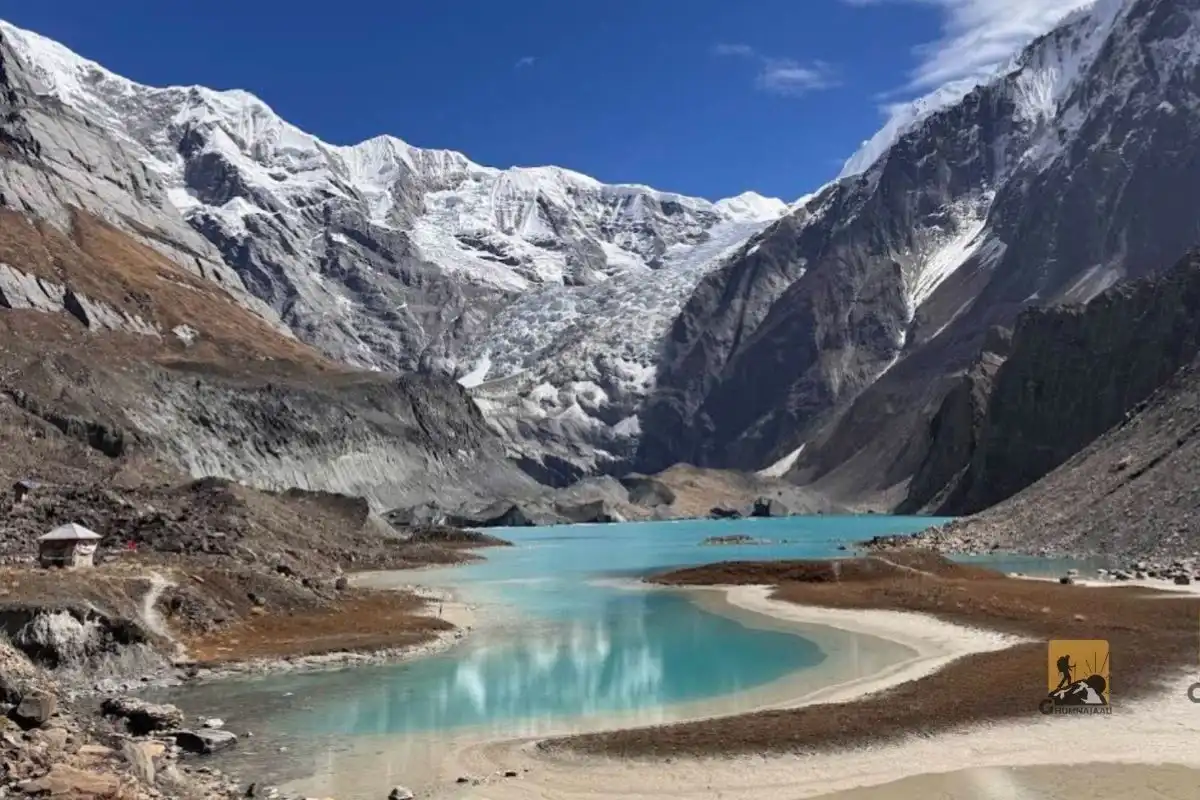
The trekking route falls within the protected Annapurna Conservation Area, one of Nepal’s most important conservation zones. At the base area, trekkers can also experience the serene beauty of Panchkunda Lake, surrounded by majestic Himalayan giants such as Nilgiri Peak, Tilicho Peak, and Baraha Shikhar (Fang), creating an extraordinary amphitheater of snow and rock.
Although this region remained relatively unexplored for many years, organized trekking in this route officially began in 2011, supported by the Ministry of Culture, Tourism and Civil Aviation, the Annapurna Conservation Area Project (ACAP), and the Narchyang Village Development Committee. The development of the trail was strongly driven by local leadership, particularly Mr. Tej Bahadur Gurung, former CAMC chairman of Narchyang, who dedicated more than a decade to opening and promoting this route for sustainable tourism.
Today, this trek offers a rare combination of historical significance, raw Himalayan wilderness, cultural authenticity, and solitude, making it an excellent choice for adventure seekers, nature lovers, and travelers looking beyond the mainstream trekking routes of Nepal.


