Best Time to Visit Nepal: A Month-by-Month Guide

Best Time to Visit Nepal: A Month-by-Month Guide
Oct 17, 2026 Ghumnajaau Team
Not sure when to go? Our month-by-month guide covers Nepal’s weather, trekking seasons, festivals and wildlife, so you can pick the perfect time for your Himalayan trip.

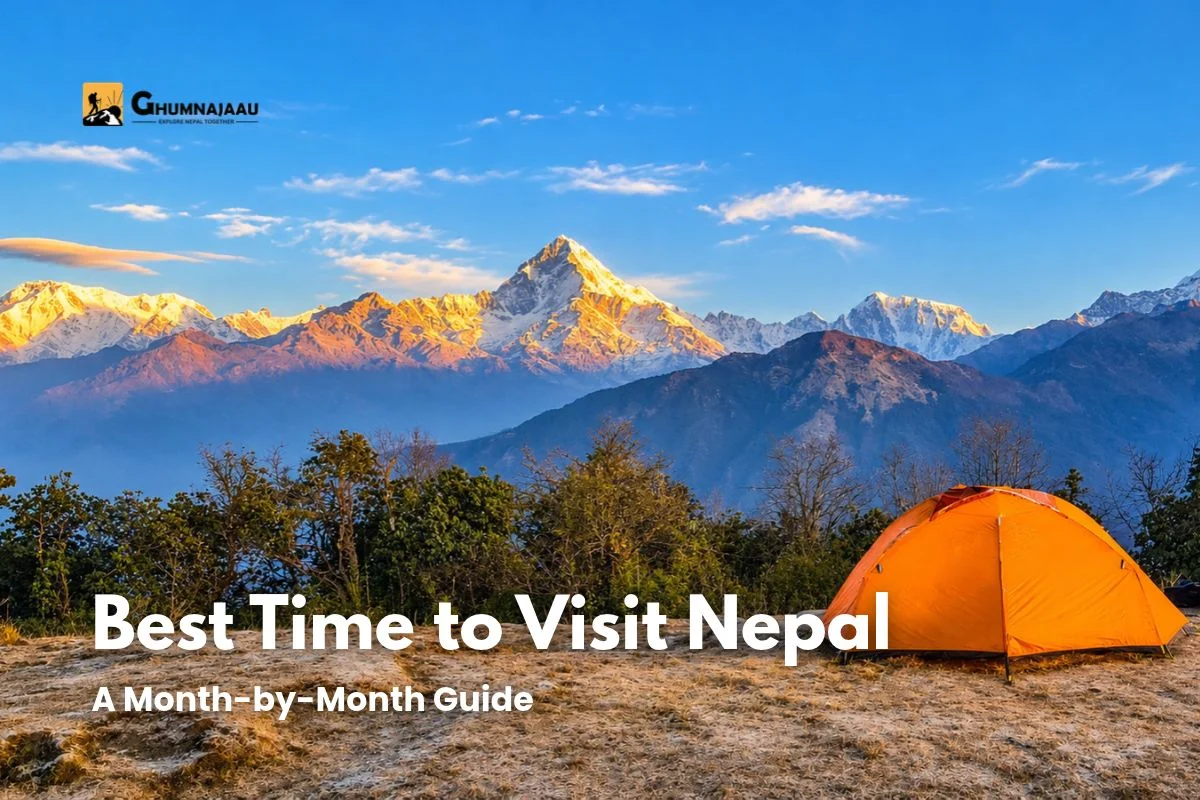
The best time to visit Nepal is October to November and March to April. Autumn (October–November) brings the clearest mountain views and stable trekking weather. Spring (March–April) brings warm days and rhododendron forests in bloom. Nepal is a year-round destination, though. Winter suits cultural tours and wildlife, and the monsoon opens up rain-shadow regions such as Upper Mustang.

This guide covers Nepal's weather month by month, the best time for each major trek, and when to go for sightseeing, wildlife, festivals, and photography. It also tells you what to expect in terms of crowds and what to pack.

Quick Answer: Best Time to Visit Nepal

  • Best overall: October and November
  • Best for trekking: March–May and October–November
  • Best for clear Himalayan views: October–November (December–February mornings are also very clear)
  • Best for rhododendron blooms: March–April in the mid-hills; April–May at higher altitudes
  • Best for cultural sightseeing: October–April
  • Best for wildlife safaris: October–March
  • Best for monsoon travel: Upper Mustang and other rain-shadow regions
  • Best for fewer crowds: December–February and June–August

Your ideal month also depends on your budget, how many days you have, and how you feel about cold or rain.

Nepal's Four Travel Seasons

Nepal's weather changes with altitude as much as with the calendar. Kathmandu (about 1,400 m), Pokhara (about 820 m), the Terai plains and the high Himalaya can all have very different weather on the same day. A sunny morning in Kathmandu says little about conditions at 4,000 m.

Spring (March to May)

Days warm up, hillsides turn green, and rhododendrons flower in many trekking regions. It is a popular time for trekking, village walks and expeditions. Afternoon cloud and haze increase as May approaches, and high altitudes stay cold at night.

Best for: trekking, rhododendron forests, mountaineering and nature photography.

Monsoon (June to mid-September)

Most of Nepal gets heavy rain. The hills are lush, and the rivers are full, but trails are muddy, leeches are common in the lower hills, and landslides can delay road travel and flights. Mountain views are often hidden by clouds. Rain-shadow regions such as Upper Mustang, Upper Dolpo and Nar Phu get far less rain.

Best for: green landscapes, countryside and cultural travel, rain-shadow treks, and travellers who want lower prices and fewer crowds.

Autumn (mid-September to November)

After the monsoon, the air is washed clean. Skies are clear, trails are in good condition, and the mountain views are at their best. It is also festival season, with Dashain and Tihar. This is the busiest time of year, so book flights, lodges and permits early.

Best for: Himalayan views, trekking, photography, festivals and family holidays.

Winter (December to February)

Mornings and nights are cold, especially in the mountains, but daytime in Kathmandu, Pokhara and Chitwan is often sunny and comfortable. Skies are usually clear, though snow can close high passes and make remote treks difficult.

Best for: cultural tours, heritage sites, wildlife, and low-altitude walks.

Nepal Weather Month by Month

The figures below are approximate Kathmandu averages. Pokhara is a little warmer and much wetter, and temperatures drop roughly 6°C for every 1,000 m you climb.

Janauray 19°C / 3°C Very low Clear mornings Low
February 21°C / 5°C Low Clear Low
March 25°C / 8°C Low Good, hazier by afternoon High
April 28°C / 11°C Moderate Good High
May 29°C / 15°C Rising Hazy Moderate
June 29°C / 18°C Heavy Poor Low
July 28°C / 19°C Heaviest Poor Low
Augest 28°C / 19°C Heavy Poor Low
September 27°C / 17°C Moderate, easing Improving late month Rising
October 26°C / 12°C Low Excellent Peak
November 23°C / 6°C Very low Excellent High, easing
December 20°C / 3°C Very low Clear Low to moderate

January: Cold, Clear and Quiet

One of the coldest months, especially above 3,000 m, but Kathmandu and Pokhara often have crisp, clear days with sharp mountain views. Heritage sites are uncrowded.

Go for: Kathmandu Valley temples, Pokhara's lakeside, Chitwan wildlife, short low-altitude hikes.

Watch out: Kathmandu mornings can be foggy, and the air quality is poor in winter. Check snow and nighttime temperatures before booking any high-altitude trek.

February: Late Winter, Early Spring

Still cold in the mountains, but the days begin to warm by the end of the month. Visitor numbers remain low, and Losar (Tibetan New Year) and Maha Shivaratri bring colour to Kathmandu, Boudhanath and Pashupatinath.

Go for: cultural sightseeing, scenic drives, Chitwan and Bardia, lower-altitude walks.

Watch out: High passes may still be snowbound.

March: Spring Trekking Begins

Trekking weather improves across Nepal. Rhododendrons start to bloom in the lower hills, and the popular routes begin to fill up.

Go for: Ghorepani Poon Hill, Langtang Valley, Annapurna Base Camp and early Everest-region treks.

Watch out: Mornings and nights stay cold at altitude. Layer up, and expect haze by afternoon.

April: Rhododendrons and Lively Trails

One of the best months for trekking. Rhododendron forests are at their peak across the hills; days are warm and Nepali New Year falls in mid-April.

Go for: Annapurna, Everest Base Camp, Langtang, and village walks combined with cultural sightseeing.

Watch out: Trails and lodges are busy. Book permits, guides and accommodation ahead.

May: Warm, Hazy and High-Altitude

The final pre-monsoon month. It is the main window for Everest-region expeditions, and higher rhododendron slopes are still in bloom. Haze, afternoon cloud and the occasional storm can reduce views.

Go for: high-altitude treks, Upper Mustang (including the Tiji festival, usually in May) and Buddha Jayanti in Lumbini.

Watch out: Lowlands become hot, so plan outdoor activity for early mornings. Upper Mustang can be very windy in the afternoons.

June: The Monsoon Arrives

Rain builds through the month. Hills turn green, but trails are muddy, and weather is changeable. Many travellers avoid the mountains, so prices and crowds drop.

Go for: museums, temples, food experiences, village stays, and a well-planned rain-shadow trek.

Watch out: Allow extra time for road journeys and domestic flights.

July: Wettest Month

Heavy rain, cloudy mountains and slippery trails. Landscapes are at their greenest, and the pace of travel is slow.

Go for: cultural sights between showers, countryside stays, Upper Mustang, Upper Dolpo or Nar Phu with a registered agency.

Watch out: Landslides can block highways. Check road status and keep your itinerary flexible.

August: Monsoon Continues

Heavy rain continues, but the countryside is vibrant, and festivals such as Gai Jatra and Teej start to appear on the calendar.

Go for: photography of green terraces, cultural travel, rain-shadow treks.

Watch out: Build buffer days around flights and road transfers.

September: The Monsoon Fades

Rain eases through the month, and the air starts to clear. Early September is still wet, but late September can be excellent and quieter than October.

Go for: cultural tours around Kathmandu and Pokhara, and trekking from late in the month if conditions allow. Indra Jatra in Kathmandu usually falls in September.

Watch out: Check recent weather before committing to a mountain view itinerary.

October: Peak Season

Often the single best month to visit Nepal. Skies are clear, trails are dry, and the mountain views are superb. Dashain, Nepal's biggest festival, usually falls in late September or October.

Go for: Everest Base Camp, Annapurna Circuit and Annapurna Base Camp, safaris and scenic road trips.

Watch out: This is the busiest month. Book flights, lodges and permits early, and expect that some transport is full during Dashain as Nepalis travel home.

November: Clear Skies, Cooling Air

Still excellent. The air is crisp, views remain outstanding, and crowds ease as the month goes on. Tihar, the festival of lights, usually falls in October or early November.

Go for: trekking, mountain photography, Kathmandu Valley heritage sites, and village walks.

Watch out: Nights get cold quickly at altitude. Bring warm layers for early-morning viewpoints.

December: Quiet Holidays

Cold in the mountains, but sunny and pleasant at lower altitudes. Visitor numbers drop after the autumn peak, although Christmas and New Year bring a smaller wave of holiday travellers.

Go for: Kathmandu, Pokhara, Chitwan and low-altitude hikes.

Watch out: Check snowfall, temperatures and high-pass conditions before confirming a winter trek.
Best Time to Visit Nepal for Trekking

Spring and autumn are the best trekking seasons, but the right month depends on the route, altitude and current conditions.

Everest Base Camp Trek

Best months: March–May and October–November.

Autumn offers the clearest views, and spring offers warmer days. Both seasons are busy, and high-altitude weather and flight delays to Lukla can affect schedules, so build in spare days.

Annapurna Circuit Trek

Best months: March–May and October–November.

The Thorong La pass (5,416 m) is the key risk point. Snow can close it, so check conditions before you go. The upper section near Manang sits in a rain shadow, which is why the circuit is sometimes walked in the early monsoon.

Annapurna Base Camp Trek

Best months: March–May and September–November.

Spring brings rhododendrons; autumn brings clear views. Avoid heavy monsoon and mid-winter, when avalanche risk rises on the upper sections.

Langtang Valley Trek

Best months: March–May and October–November.

A good choice for mountain scenery and traditional villages close to Kathmandu. Spring is best for flowers.

Upper Mustang Trek

Best months: May–October.

Upper Mustang lies in the Himalayan rain shadow, so it stays comparatively dry in the monsoon. It requires a special restricted-area permit and travel with a registered trekking agency and guide, so book well ahead and check current fees and rules. Winter is very cold.

Important: These are general seasonal guides, not guarantees. Check trail conditions, permits and the forecast before departure.

Best Time for Sightseeing, Wildlife and Festivals

Cultural Sightseeing: October to April

Cool, dry weather is best for exploring Kathmandu Valley's temples, stupas and old towns, Pokhara's lakes and viewpoints, and Lumbini, the birthplace of Buddha. Culture can be enjoyed year-round, but monsoon rain disrupts outdoor visits.

Wildlife Safaris: October to March

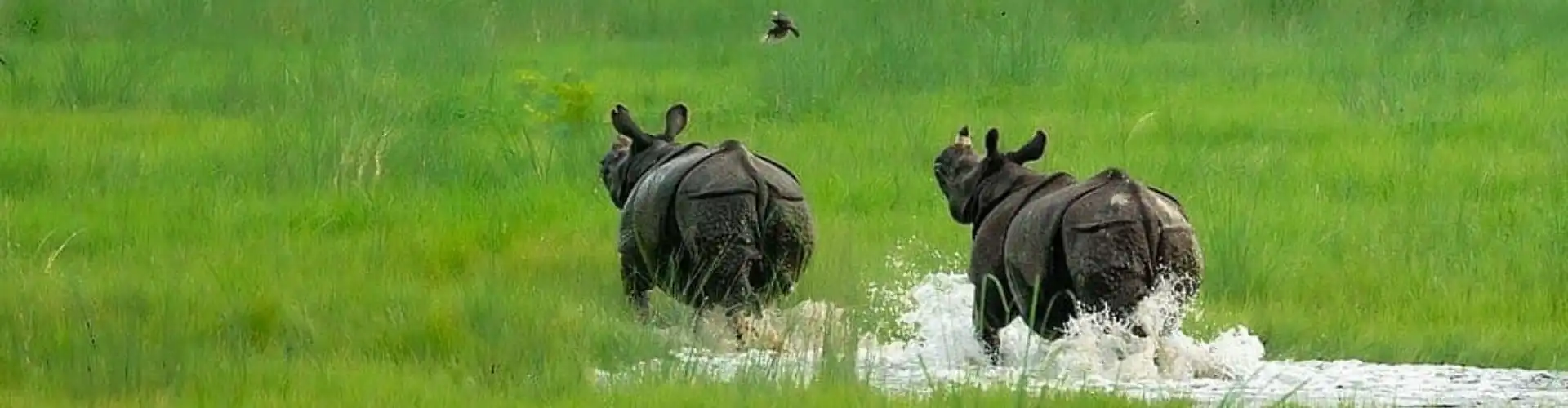
Chitwan and Bardia National Parks are most comfortable from October to March. Winter mornings can be foggy, and sightings are never guaranteed. The hot months of April and May can also be good for wildlife because animals gather near water, though temperatures are high.

Festivals

Festival dates follow the lunar calendar and change every year, so confirm them for your travel dates.

  • February–March: Losar, Maha Shivaratri, Holi
  • April: Nepali New Year
  • May: Buddha Jayanti, Tiji (Upper Mustang)
  • August–September: Gai Jatra, Teej, Indra Jatra
  • September–October: Dashain
  • October–November: Tihar, Mani Rimdu in the Everest region

Himalayan Photography: October to November

Post-monsoon skies are the clearest of the year. Spring is also rewarding for colourful forests, and winter mornings can be very sharp. Always plan flexible early starts

Best Time to Visit Nepal: Quick Comparison

First visit to Nepal October–November or March–April
Himalayan mountain views October–November
Everest region trekking March–May, October–November
Annapurna trekking March–May, September–November
Rhododendron forests March–May, depending on altitude
Cultural sightseeing October–April
Wildlife experiences October–March
Monsoon trekking Rain-shadow regions such as Upper Mustang
Fewer crowds and lower prices December–February or June–August
Winter cultural holiday December–February

What to Pack for Nepal by Season

For every season

  • Comfortable walking shoes or trekking boots
  • Sunscreen, sunglasses and a hat
  • Reusable water bottle and water-purification supplies
  • Personal medication and a basic first-aid kit
  • Travel insurance that covers trekking and high altitude

Spring (March–May): lightweight clothing, warm layers and a rain jacket.

Monsoon (June–September): waterproof jacket and trousers, quick-drying clothes, spare socks, a rain cover for your backpack and electronics, shoes with good grip, and insect repellent for leeches.

Autumn (September–November): layers for changing temperatures, warm clothes for mornings and evenings, and an insulated jacket for higher elevations.

Winter (December–February): thermal base layers, a warm jacket, hat and gloves, warm footwear, and a sleeping bag rated for the cold on overnight treks.

Before a high-altitude trek, check the forecast and ask an experienced guide about route-specific equipment.

Frequently Asked Questions

What is the best month to visit Nepal?

October is often the best single month, with clear skies, dry trails and superb mountain views. April and November are also excellent.

What is the best time to see Mount Everest?

October–November gives the clearest views, and March–May is the warmer alternative. You can see Everest on the trek to Base Camp or from Kala Patthar and, on clear days, from flights and viewpoints such as Nagarkot.

Can I visit Nepal during the monsoon?

Yes. June to September suits cultural travel, countryside stays and rain-shadow treks. Rain can affect roads, flights and trekking in many areas, so keep your plans flexible.

Is winter a good time to visit Nepal?

Yes, for cultural tours, heritage sites, wildlife and low-altitude hikes. High-altitude routes can be affected by snow and extreme cold.

What is the cheapest time to visit Nepal?

The monsoon and mid-winter are usually quieter and cheaper, but prices depend on hotel, route and demand. Compare current rates before booking.

Which month is best for Everest Base Camp?

October–November for the clearest views, or March–May for warmer weather. Both seasons are busy.

How many days do I need to visit Nepal?

Five to seven days covers a cultural holiday around the main destinations. Ten to fourteen days lets you add a short trek or wildlife stay. Longer Himalayan treks need extra days for acclimatisation.

Is Nepal suitable for family holidays?

Yes. Choose destinations and itineraries to suit your children's ages and fitness, and allow enough time for travel between locations.

Plan Your Nepal Trip with Ghumnajaau

Every season shows a different side of Nepal: rhododendron forests in spring, mountain panoramas in autumn, quiet heritage tours in winter and green countryside in the monsoon. Ghumnajaau Pvt. Ltd. helps travellers plan Nepal holidays around their interests, dates and budget, whether that is a cultural tour, family holiday, wildlife safari, short trek or longer Himalayan adventure.

Ready to explore Nepal?

  • Website: www.ghumnajaau.com
  • Email: info@ghumnajaau.com
  • Phone / WhatsApp: +977-9851333595 | +977-9802344595
  • Location: Kathmandu, Nepal

Ghumnajaau: Explore Nepal Together.

Ghumnajaau local expert will be available to help your resolve your quires for this tour.
  • +977-98513-33595
Customize your own trip?