Nepal Culture and Etiquette: A Practical Guide for Visitors

Nepal Culture and Etiquette: A Practical Guide for Visitors
Nov 19, 2026 Ghumnajaau Team
Nepal is a welcoming country, and a few simple habits go a long way. Knowing local customs helps you connect with people, avoid awkward moments and travel respectfully, whether you are exploring Kathmandu's heritage sites, staying with a local family or walking through mountain villages.

Customs vary between communities, religions and households. Follow your host's lead and ask politely whenever you are unsure. Nepal Travel Guide

Nepal Etiquette at a Glance
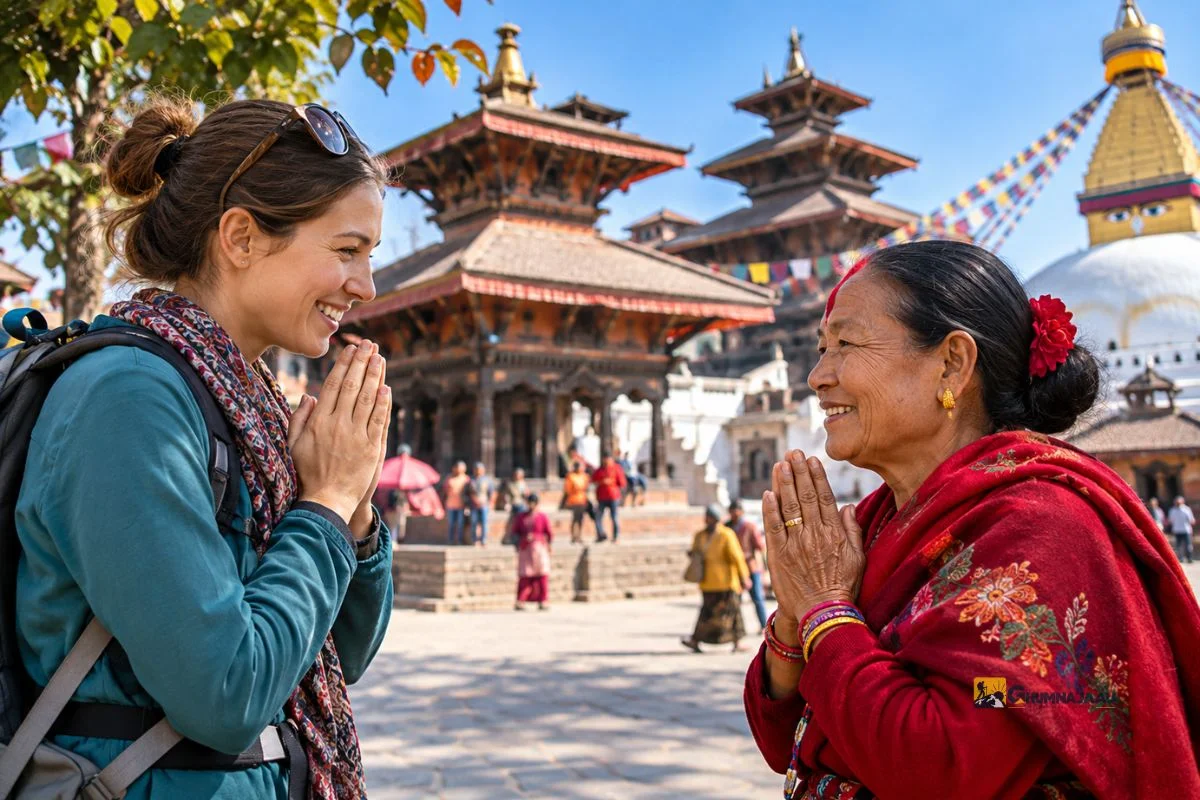
  • Greet people with a smile and a Namaste, palms together at chest level.
  • Dress modestly, with shoulders and knees covered, especially in villages and sacred places.
  • Remove your shoes before entering temples, monasteries and most homes.
  • Use your right hand (or both hands) to give, receive and eat.
  • Ask before photographing people, ceremonies and private spaces.
  • Walk clockwise around stupas, prayer wheels and mani walls.
  • Avoid sharing food you have bitten or drinks you have sipped from.
Greetings and Everyday Manners

Namaste is the most common greeting in Nepal. Bring your palms together at chest level, bow your head slightly, and smile. It works for everyone, from hotel staff to village elders, and needs no handshake or physical contact. In Sherpa and Tibetan communities, you may also hear Tashi Delek.

Greet elders first and speak politely. You will often hear people call each other dai (older brother) and didi (older sister). These are friendly, respectful terms, and visitors who use them usually get a warm response.

Keep public displays of affection discreet, and stay calm in disagreements. A patient, friendly manner is valued everywhere.

What to Wear in Nepal

Choose comfortable, modest clothing. Covering your shoulders and knees is a considerate choice in villages, at religious sites and in more conservative areas. Light long trousers, a loose top and a scarf or shawl work well in most situations. Trekking clothes are fine on the trail, but cover up when you pass through villages or visit a monastery. Save swimwear for pools and resort settings.

Visiting Temples and Monasteries

Sacred places are active places of worship, not just sights. Give worshippers space, speak quietly and follow the instructions posted at each site.

  • Remove your shoes where required, and often your hat as well.
  • Walk clockwise around Buddhist stupas, prayer wheels and mani walls.
  • Check before entering: some Hindu temples, or their inner sanctums, are open to Hindus only.
  • Observe any restrictions on photography and leather items.
  • Do not touch statues, offerings or sacred objects unless invited to.
  • Avoid pointing your feet at shrines or sitting with your feet towards an altar.

Requirements differ from site to site, so ask your guide or the caretaker before entering an unfamiliar sacred space. Kathmandu Valley Travel Guide

Food and Dining Etiquette

Sharing a meal is one of the best ways to experience Nepal. When you eat with a family, let your host guide you.

Wash your hands before eating. If you eat with your fingers, use your right hand only. Use the serving spoon for shared dishes, not your own spoon.

Food that has touched someone's mouth is considered jutho, meaning unsuitable for sharing. Avoid offering food you have bitten and avoid drinking from another person's bottle or cup. Tell your host about any dietary needs politely before the meal.

For more on what to try, see our guide to traditional Nepali food.

Visiting a Home or Homestay

Ask whether to remove your shoes at the door, and wait to be invited into private rooms or the kitchen. A small gift such as fruit or sweets is a thoughtful gesture.

If you are offered tea or food, accept it warmly, or decline politely and explain any dietary needs. Households differ, so asking your host is better than assuming every home follows the same customs.

Body Language and Respect

Use your right hand, or both hands, when giving or receiving something. Avoid touching people's heads, stepping over someone's legs, or pointing the soles of your feet at others.

These gestures can carry meanings visitors do not always recognise. If you make a mistake, a brief apology and a willingness to learn are all that is needed.

Festivals and Cultural Experiences

Before joining a celebration, ask which activities welcome visitors. Let ceremonies and processions pass without obstruction, and ask permission before taking close-up photographs. Best Time to Visit Nepal

A local guide or host can explain what you are seeing and help you take part appropriately. If you are planning around the calendar, read our guide to the major festivals of Nepal.

Shopping and Tipping

Polite bargaining is normal in tourist markets, but keep it friendly and stop once you agree on a price. Fixed prices apply in most shops and restaurants. Tips are appreciated rather than compulsory. Many restaurants add a service charge, and guides and porters usually receive a tip at the end of a trip. Nepal Travel Tips

Support Local Communities

Choose locally owned accommodation, buy from local makers and consider hiring local guides. These choices help tourism income reach the communities you visit.

Stay on marked trails, dispose of rubbish responsibly, and carry your waste out where there are no disposal facilities. Caring for Nepal's environment is part of respecting its people and places.

Plan a Culturally Rich Trip to Nepal

Discover Nepal through its heritage, hospitality, and everyday traditions. Ghumnajaau can plan cultural visits, homestays, and local experiences around your interests, with guides who can explain what you see. Nepal Sightseeing & Cultural Tours

Share your travel dates, group size, and interests, and we will help you shape your journey. Customize My Trip

Best Time to Visit Nepal

Nepal Culture and Etiquette FAQs

Choose comfortable, modest clothing. Covering your shoulders and knees is a considerate choice for religious visits and in conservative areas.

Say Namaste with your palms together at chest level and a smile. It is polite for everyone and needs no handshake.

No. Some Hindu temples restrict entry to Hindus. Check the signs or ask the caretaker before you go in.

Yes. Ask before photographing people, ceremonies or private spaces, and follow any photography restrictions at the site.

It is best to use your right hand for eating, and for giving and receiving things. The left hand is traditionally considered less clean.

Apologise politely, listen to the explanation and adjust your behaviour. You do not need to know every custom before you arrive.

Plan Your Trip with Ghumnajaau

This data will only be used by our team to contact you and no other purpose.